
How to Choose Botanicals for a Natural Blackwater Aquarium
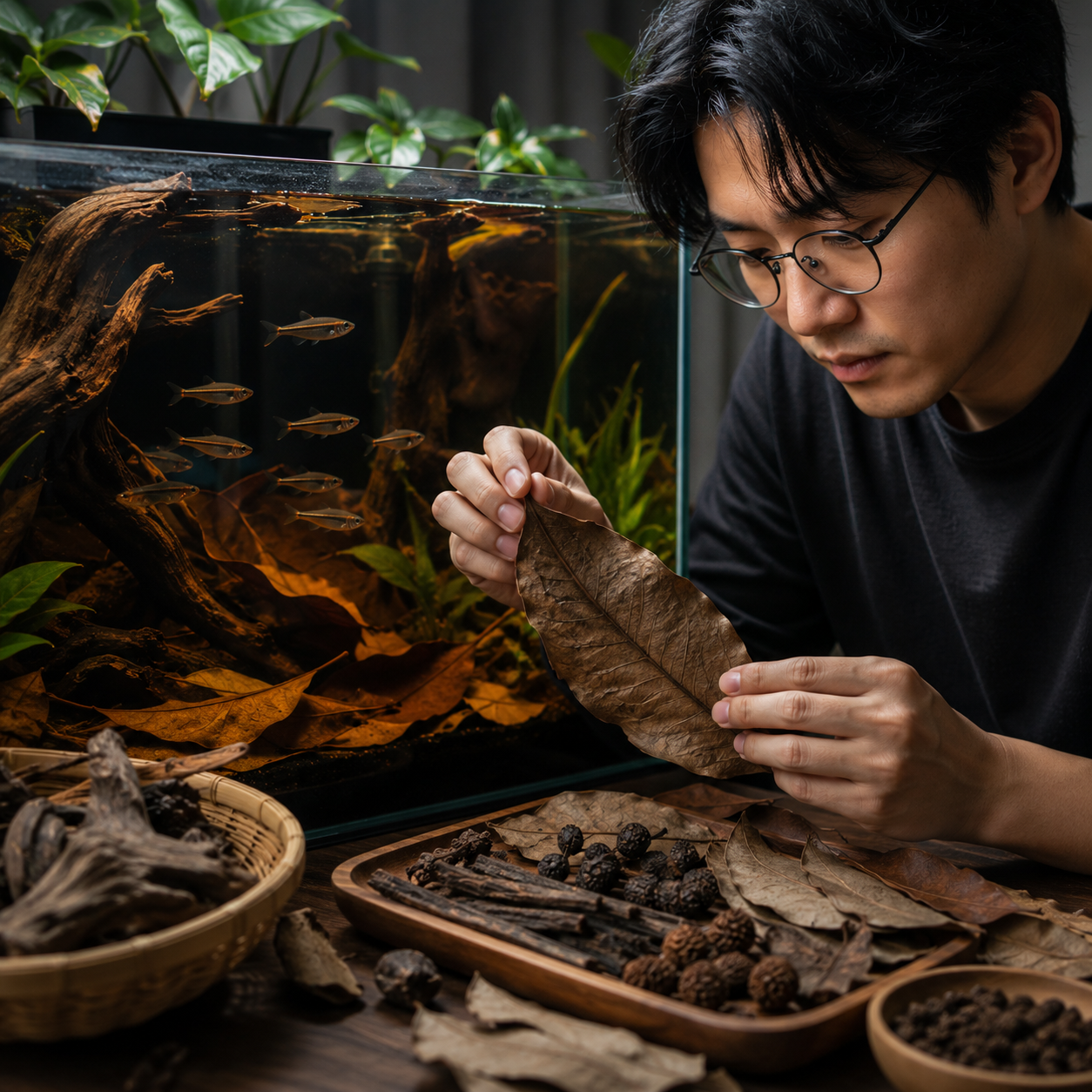
Botanicals — natural seed pods, dried leaves, bark, and roots — are one of the most exciting developments in modern freshwater fishkeeping. They recreate the leaf litter, tannin-stained water, and complex microhabitats of tropical streams and forest pools, creating environments where fish behave more naturally and many species breed more readily.
What Are Aquarium Botanicals?
Aquarium botanicals are dried natural materials collected specifically for aquarium use. They include:
- Leaves: Catappa (Indian almond), guava, mulberry, banana, oak
- Seed pods: Alder cones, cariniana pods, mokha pods, banana stems, coconut shell
- Wood and bark: Cholla wood, mopani wood bark, spider wood
- Fruit husks: Various seed pod casings from tropical trees
As they decompose, they release tannins, humic acids, and trace compounds that acidify and soften water naturally — mimicking the chemistry of blackwater habitats.
Benefits of Botanicals
- Tannin release: Stains water amber and lowers pH gradually
- Humic acid: Has mild antibacterial and antifungal properties; can reduce disease pressure
- Microhabitat: Pods, shells, and hollowed wood become hiding spots for shrimp, small fish, and fry
- Biofilm growth: Botanicals accumulate biofilm as they decompose — a primary food source for shrimp
- Conditioning for breeding: Many blackwater species breed more readily in tannin-rich water
Most Popular Botanical Choices
Catappa Leaves (Indian Almond Leaves)
The most widely used botanical in the hobby. Catappa leaves release strong tannins and humic acid, stain water amber, and lower pH measurably. They decompose completely in 4–6 weeks and should be replaced as they break down.
Best for: Betta tanks, shrimp tanks, blackwater community tanks
Alder Cones
Small, pine cone-like structures from the alder tree. Alder cones release tannins slowly, have mild antifungal properties, and are particularly popular in betta breeding setups. They are small enough to use in nano tanks without overpowering the visual aesthetic.
Best for: Nano tanks, betta tanks, shrimp tanks
Cariniana Pods
Large, sculptural seed pods with deep internal cavities. Shrimp and small fish explore them immediately. They decompose slowly over months, providing long-term microhabitat.
Best for: Shrimp tanks, small cichlid tanks, display setups
Cholla Wood
Hollowed cylindrical wood with a natural lattice structure. Shrimp walk through the internal passages constantly. Biofilm grows densely on its surface. It softens water gently.
Best for: Shrimp tanks, nano tanks
How to Prepare Botanicals Safely
- Rinse thoroughly under running water to remove dust and loose debris
- Boil leaves and smaller pods for 10–15 minutes — this sterilises them and waterloggs them so they sink immediately
- Soak larger pods in a bucket of dechlorinated water for 24–48 hours instead of boiling (some pods crack under boiling temperature)
- Add gradually — large amounts of botanicals added at once can cause a rapid pH drop. Introduce in stages over 1–2 weeks.
How Many to Use?
Start conservatively:
- 1–2 catappa leaves per 20 litres of water
- 3–5 alder cones per 20 litres
- 1 large pod per 10–20 litres
Monitor pH and water colour after adding. Amber-tinted water is normal; black or opaque water indicates too many botanicals for the current water change schedule.
Browse our botanical collection — catappa leaves, seed pods, alder cones, and specialty botanicals available for delivery across Singapore.