
How to Choose a Breeding Box, Nursery Tank, or Fry-Safe Setup
You've spotted eggs or a berried female shrimp in your tank — now what? The biggest challenge in freshwater breeding is preventing fry from being eaten before they are large enough to survive with adults. Here are your three main options and when to use each.
Option 1: Breeding Box (In-Tank)
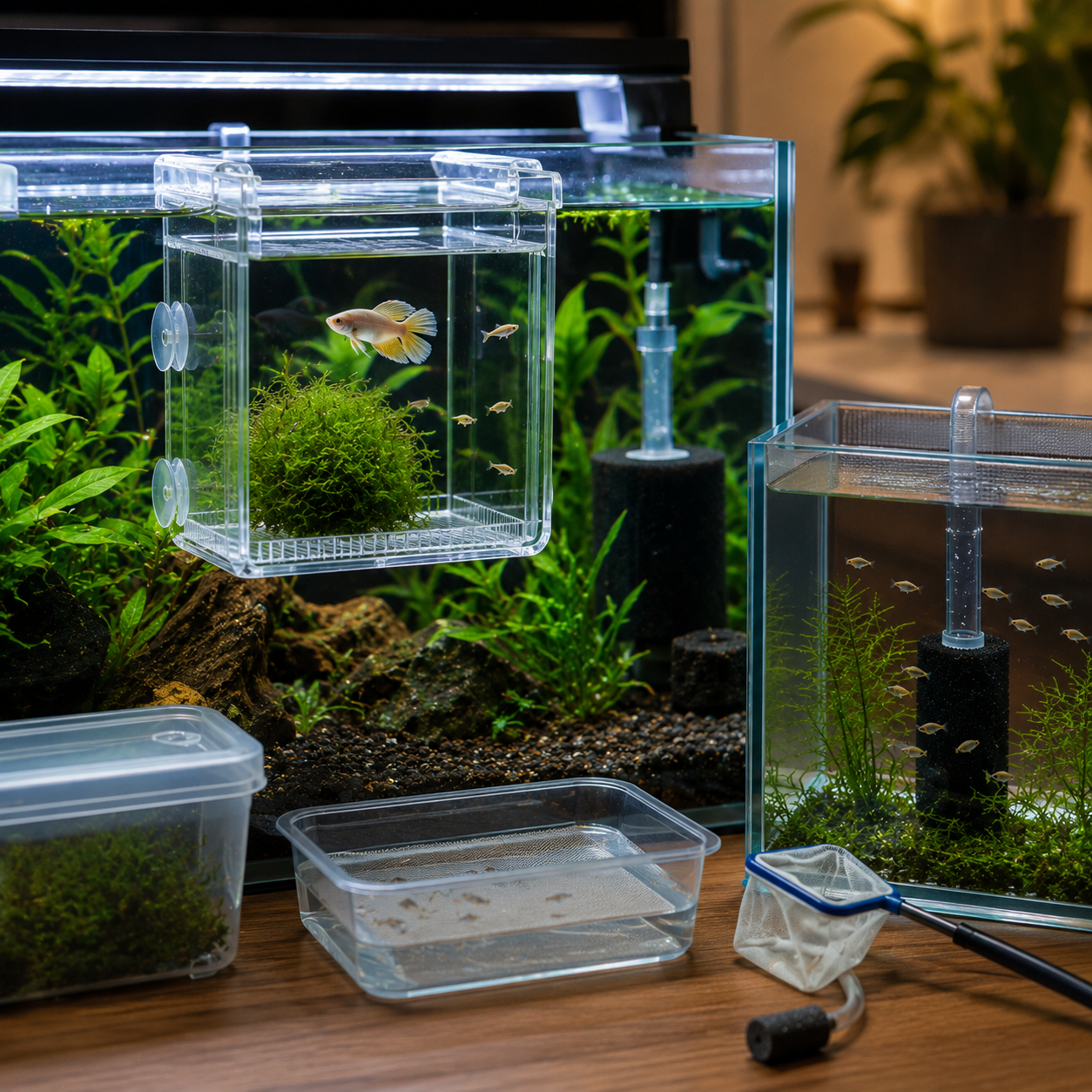
A breeding box is a transparent container that hangs inside or floats inside the main aquarium, using the main tank's filtered water while physically separating the female, eggs, or fry.
Types of Breeding Boxes
- Hang-on breeding box: Clips to the side of the aquarium wall; water is pumped or flows naturally into it
- Floating breeding box: Floats inside the tank; water enters through small slots
- Divider box: Divides a section of the main tank with mesh
When to Use a Breeding Box
- You have limited space and cannot set up a separate tank
- Your main tank is community-focused and fry will be eaten immediately
- You want to isolate a heavily pregnant livebearer before she gives birth
- Short-term (1–2 weeks) fry protection for livebearers (guppies, mollies, platies)
Limitations
- Small volume creates rapid ammonia buildup — daily water changes required
- Stressful for sensitive species (bettas, cichlids)
- Not suitable for fry that need to grow for more than 2 weeks
- Not appropriate for egg layers with extended fry care periods
Option 2: Separate Nursery Tank
A dedicated nursery tank (10–30 litres) is the best option for serious breeding. It gives fry their own stable, safe environment with appropriate filtration.
Setup Requirements
- Filtration: A sponge filter only — sponge filters provide gentle flow, no suction risk, and biofilm for fry to graze
- Heating: Same temperature as the parent tank
- Substrate: Bare bottom or fine sand (easier to keep clean)
- Plants: Java moss or floating plants provide fry with cover and natural grazing
- Lighting: Moderate — avoid bright light that stresses young fry
When to Use a Separate Tank
- You are seriously breeding fish and want maximum fry survival rate
- You are raising egg-layer fry (tetras, cichlids, corydoras) that take 2–4 weeks to grow large enough for the community
- You need to raise fry on specialised food (infusoria, baby brine shrimp) without contaminating the main tank
Option 3: Planted Fry-Safe Community Setup
For livebearers in a densely planted tank, a separate breeding vessel may not be needed at all. A tank with thick moss, floating plants, and hiding spots allows some fry to survive naturally.
What You Need
- Dense java moss carpet or java moss clumps
- Floating plant cover (frogbit, water sprite)
- Minimal adult fish population
- Regular top-up of hiding spots
Realistic Survival Rate
Even in a well-planted tank, expect only 10–30% of livebearer fry to survive to juvenile size. For maximum survival, a breeding box or nursery tank is still necessary.
Summary: Which to Choose?
| Goal | Best option |
|---|---|
| Isolate pregnant livebearer | Breeding box |
| Raise egg-layer fry to juvenile | Separate nursery tank |
| Casual breeding in community tank | Planted fry-safe setup |
| Maximum survival rate | Separate nursery tank |
Browse our breeding accessories including breeding boxes, sponge filters, and nursery tank essentials.