
Aquarium Delivery in Singapore: How to Safely Receive Fish, Shrimp, and Plants at Home
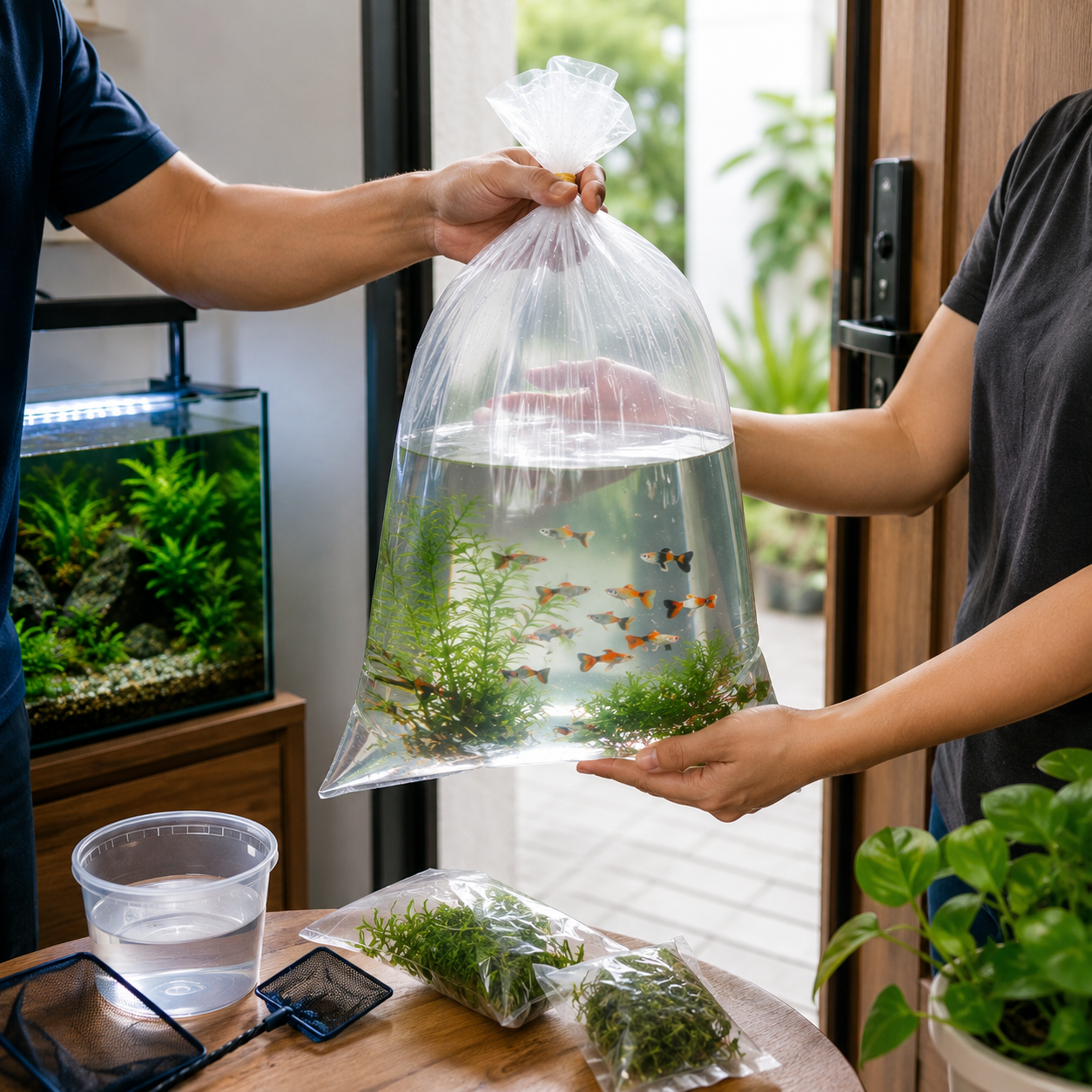
Door-to-door aquarium delivery has transformed how Singapore hobbyists shop for fish, shrimp, and plants. The convenience is significant — access to wider variety, detailed species information, and no need to carry fish bags through the MRT. But live animal delivery requires a specific receiving process to ensure your livestock arrives and settles in safely.
What to Expect in Your Delivery
Fish and Shrimp Packaging
Live fish and shrimp from reputable online aquarium retailers are typically packed:
- In individual oxygen-filled bags (one species per bag for fish; community shrimp may share a bag)
- Cushioned in newspaper or foam for insulation and impact protection
- In a sealed cardboard box or styrofoam cooler
- With a heat pack in cold weather (less common in Singapore's tropical climate, but used if delivery to air-conditioned offices is expected)
In Singapore's climate, fish in properly oxygenated bags can survive 12–24 hours of transit without issue. Most same-day or next-day deliveries arrive in excellent condition.
Plant Packaging
Aquatic plants are typically:
- Wrapped in damp newspaper or wet paper towel to retain moisture
- Tissue culture plants in sealed cups (do not need to be kept wet)
- Stem plant bunches wrapped at the base
Plants tolerate transit well — they do not require the same urgent attention as live fish.
What to Do When Your Delivery Arrives
Step 1: Open the Box Immediately
Do not leave live delivery boxes unopened. Open immediately upon receipt and assess the condition of all bags.
Healthy on arrival:
- Fish swimming actively in a clear, oxygenated bag
- Bag still has significant oxygen (feels inflated, not deflated)
- Water is clear
Signs of stress (act quickly):
- Fish lying at the bottom of the bag — float the bag immediately; many will recover
- Depleted oxygen — bag feels soft/flat — transfer to a container with aerated tank water
Step 2: Temperature Acclimatisation (Fish and Shrimp)
- Float the sealed bag in your aquarium for 15–20 minutes
- This brings the bag water temperature in line with your tank, preventing temperature shock
- Do not skip this step even if the bag feels warm — Singapore delivery bags in transit may vary by several degrees from your tank
Step 3: Water Acclimatisation (especially important for shrimp)
Shrimp are highly sensitive to sudden water chemistry changes:
Drip acclimatisation method (recommended for shrimp and sensitive fish):
- After temperature equalisation, pour bag water and shrimp into a small container
- Set up a drip line from your tank using airline tubing with a knot or valve to control flow (approximately 2 drops per second)
- Allow tank water to drip into the container for 30–60 minutes
- Once the container volume has doubled, the shrimp/fish are acclimatised
- Net them out and add to the tank; discard the container water
For hardy fish (tetras, livebearers, danios): The float-and-open method is sufficient:
- After floating, open the bag and add one cup of tank water
- Wait 5 minutes; add another cup
- Wait 5 more minutes; net the fish into the tank
Step 4: Do Not Add Bag Water to the Tank
This is critical: the water in delivery bags may contain disease pathogens, parasites, or ammonia from transit waste. Always net fish out and leave the bag water behind.
Step 5: Quarantine (Recommended)
For the most careful approach, place new arrivals in a separate 20-litre quarantine tank for 2–4 weeks before adding to your display tank. This allows:
- Observation for disease symptoms that appear after transit stress resolves
- Treatment without affecting the established display tank
- Gradual acclimatisation to your display tank's parameters
Plant Acclimatisation
Aquatic plants require minimal receiving procedure:
- Remove wrapping and rinse plants under dechlorinated water
- For tissue culture plants: remove from cup, rinse gel from roots thoroughly, plant or float immediately
- For stem plants: trim any damaged base sections before planting
- For rhizome plants (anubias, java fern): remove any attached cotton thread from previous attachment and reattach to your own hardscape
If Something Goes Wrong
- DOA (dead on arrival): Reputable retailers have replacement or refund policies — photograph the sealed bag and the deceased fish immediately as documentation
- Fish arrives stressed but alive: Float bag, drip acclimatise, provide cover and hiding spots, feed lightly for the first 24–48 hours
Shop our freshwater livestock, shrimp, and plants with delivery across Singapore.