

Why Is My Aquarium pH Changing? Causes, Risks, and What to Avoid
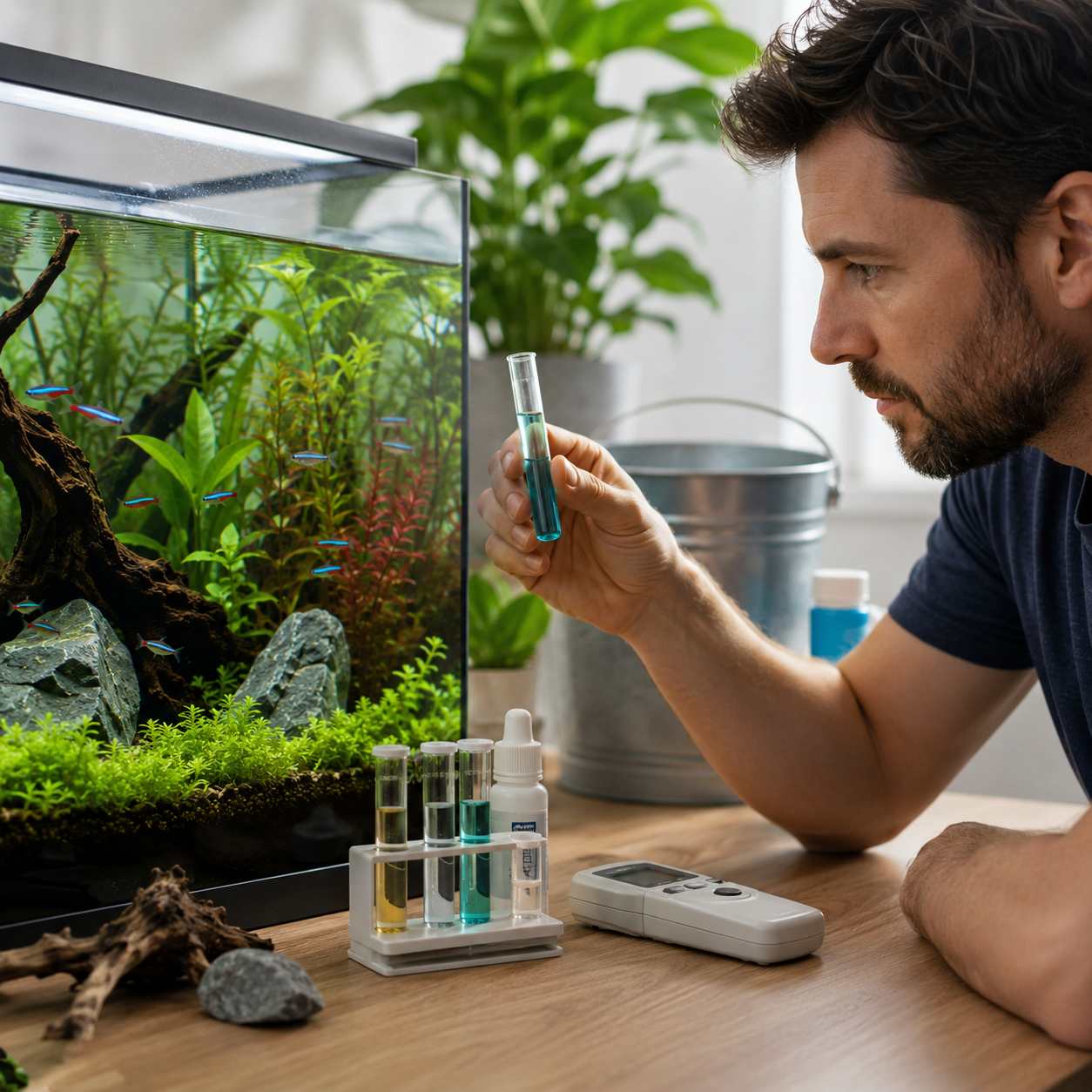
pH stability is more important than pH value in most freshwater aquariums. Fish can adapt to a wide pH range — but sudden shifts are physiologically shocking and can cause rapid death. Here's what causes aquarium pH to change and how to manage it.
What Is a Dangerous pH Change?
A change of more than 0.3–0.5 pH units in 24 hours is stressful for most fish. A change of 1.0 unit or more in a few hours can be lethal, even if the final pH would otherwise be acceptable.
Common Causes of pH Changes
1. CO2 Fluctuation (Planted Tanks)
In CO2-injected planted tanks, pH follows a predictable daily cycle:
- Lights on + CO2 injection: pH drops as CO2 dissolves into carbonic acid (this is normal)
- Lights off: pH rises as plants stop photosynthesising and CO2 off-gassing resumes
This daily swing is typically 0.2–0.5 pH units and is acceptable if it remains within that range. A swing of 1.0+ units indicates too much CO2 or insufficient buffering.
Fix: Ensure KH (carbonate hardness) is at least 3–4° to buffer the swing. Reduce CO2 injection rate if swings exceed 0.5 units.
2. Low KH (Carbonate Hardness)
KH is the water's buffering capacity — its ability to resist pH change. Singapore tap water has moderate KH, but if you use RO water or if extensive water changes dilute KH below 2–3°, the water loses its buffer and pH becomes unstable.
Signs: pH reading varies wildly between tests; sudden crashes to very low pH.
Fix: Add a KH buffer (sodium bicarbonate or a commercial KH builder) to raise carbonate hardness before it reaches this point.
3. Substrate or Decoration Affecting pH
- Aragonite, coral sand, crushed coral: Actively raise pH and KH over time — unsuitable for softwater setups
- Driftwood and botanicals: Release tannins that gradually lower pH
- Certain rocks (limestone, calcite): Dissolve slowly and raise pH
Fix: Test rocks with white vinegar — if they fizz, they contain calcium carbonate and will raise pH. Remove inappropriate substrate or hardscape for your target parameters.
4. Aquasoil Aging
Many aquasoil substrates (ADA Amazonia, Tropica Soil) actively lower pH when new, releasing acidic compounds. This effect gradually diminishes over 3–6 months.
Fix: During the first 3 months of a new aquasoil tank, perform more frequent water changes (twice weekly) to dilute acidic compounds and stabilise pH.
5. Organic Decomposition
Decaying plant matter, uneaten food, and fish waste release CO2 and organic acids that lower pH over time. This is why an established tank's pH often drifts downward between water changes.
Fix: Regular water changes (25% weekly) replenish buffering capacity and dilute accumulated organic acids.
6. Atmospheric CO2 Changes
In a tank with good surface agitation, CO2 in the water equilibrates with atmospheric CO2 (approximately 0.04%). Poor surface agitation allows CO2 to accumulate in the water, lowering pH — especially overnight in a densely planted tank.
Fix: Ensure sufficient surface movement from your filter outlet, especially at night when CO2 is not being consumed by plants.
pH Stabilisation Tips
- Maintain KH at 4–6° for most community freshwater setups
- Perform regular 25% weekly water changes
- Do not overdose CO2 — monitor with a drop checker
- Test pH at the same time of day for consistent comparison (CO2-planted tanks vary throughout the day)
Browse our water testing and water chemistry range — KH test kits and buffers available in Singapore.