
Aquascape Maintenance Guide: How to Trim, Clean, and Preserve Your Layout Over Time
Creating an aquascape is the starting point — maintaining it is where most hobbyists either succeed or fail. Without consistent care, stem plants overgrow, algae takes hold, carpet plants lose their shape, and within a few months the original design is unrecognisable. This guide gives you a complete maintenance framework for keeping a planted tank in top condition long-term.
Why Aquascapes Need Active Maintenance
Unlike a decorative rock tank that stays static, a planted aquascape is a living system that is constantly changing:
- Fast-growing stem plants double in height every 1–2 weeks
- Floating plants can cover the entire surface in days
- Carpet plants grow upward and lose their flat form without trimming
- Algae exploits any imbalance in light, CO2, or nutrients
- Equipment (filters, CO2 diffusers, lily pipes) accumulates biofilm and scale
Proactive maintenance prevents these from becoming problems.
Weekly Maintenance
Water Change (25–30%)
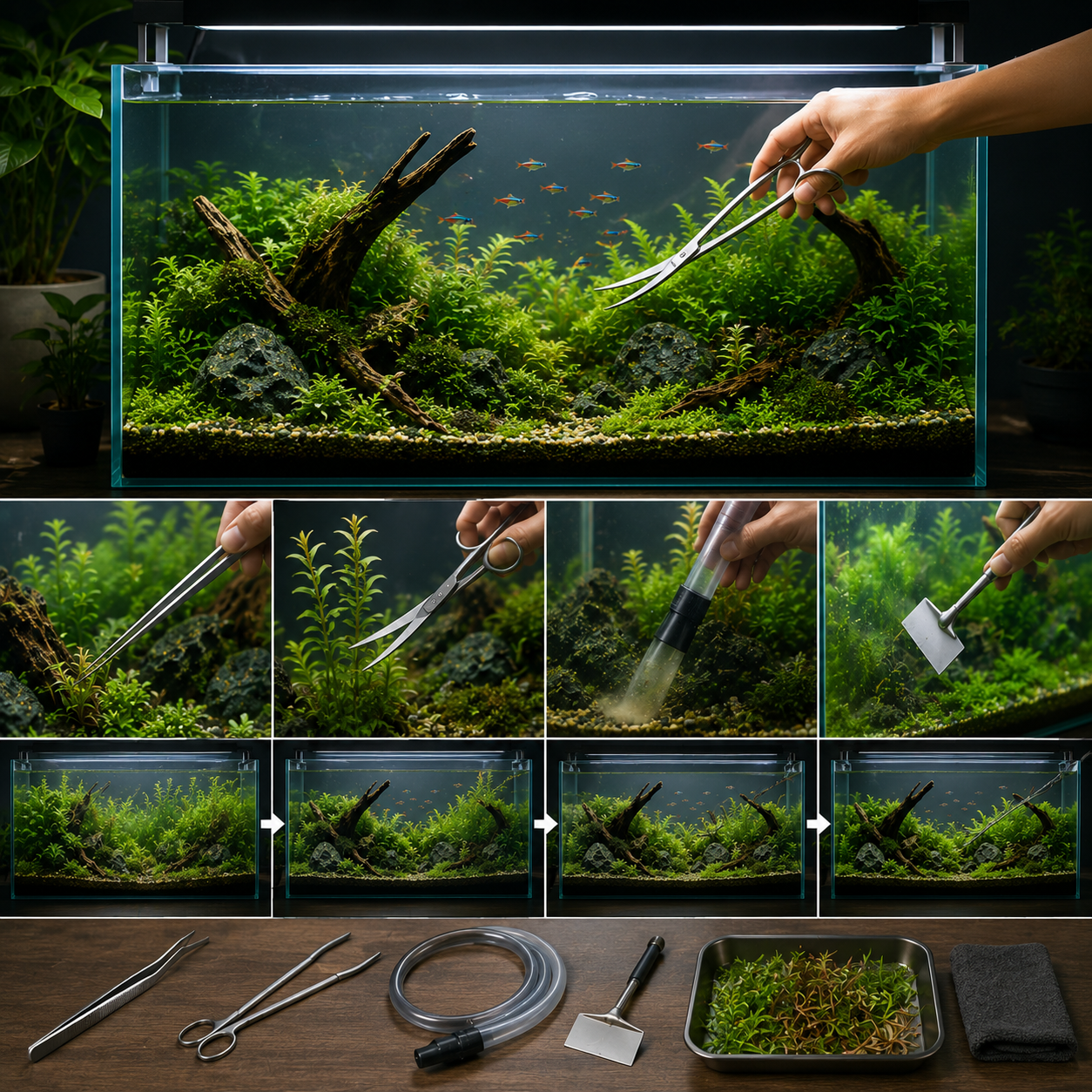
- Use a gravel vacuum to siphon debris from the substrate surface
- Blow out dead zones in the carpet with a turkey baster before vacuuming
- Add dechlorinated water at approximately the same temperature as the tank
- In CO2-injected tanks, restart CO2 after refilling (if auto-off is not set)
Trim Fast-Growing Plants
Stem plants (Rotala, Hygrophila, Ludwigia) need weekly trimming in high-tech tanks:
How to trim stem plants:
- Cut stems at the desired height with sharp aquascaping scissors
- Leave at least 4–5 nodes intact below the cut
- Remove all cuttings from the tank immediately — decomposing cuttings cause ammonia and algae spikes
- Plant the removed tops back if gaps are needed, or discard/share them
Trim Floating Plants
Floating plants (frogbit, salvinia) can double in a week. Remove excess by hand during water changes. Maintain 30–50% surface coverage maximum to avoid shading submerged plants.
Remove Dead and Yellowing Leaves
Yellowing or dead leaves on anubias, crypts, and swords should be removed at the base with scissors. Decomposing leaves release ammonia and attract algae.
Biweekly Maintenance
Trim Carpet Plants
Carpet plants (HC Cuba, Monte Carlo, dwarf hairgrass) need horizontal trimming every 2–3 weeks:
- Use long, flat-bladed or curved aquascaping scissors
- Cut horizontally across the carpet at 1–2 cm height
- Remove all clippings immediately with a fine net or turkey baster
- After trimming, carbon filter or 30% water change helps clear fine particles
Clean Glass Interior
- Use a magnetic glass cleaner or long-handled razor scraper on interior panels
- Clean before the water change so dislodged algae is removed with the changed water
- Pay attention to corners and behind equipment where algae builds up unseen
Monthly Maintenance
Clean Filter
- Squeeze filter sponges in removed tank water (never tap water)
- Clean only one sponge per month if you have multiple stages — never all at once
- Inspect and replace any spent mechanical filter media (fine filter floss)
- Canister filter users: full canister cleaning every 1–3 months depending on bioload
Clean Lily Pipes and Equipment
- Remove lily pipes and soak in white vinegar to dissolve calcium deposits
- Brush with appropriate-sized pipe cleaning brush
- Clean CO2 diffuser with hydrogen peroxide (3%): soak for 10–15 minutes, rinse
- Wipe heater and thermometer clean
Check Root Tabs
Heavy root-feeding plants (amazon swords, vallisneria) deplete root tabs over time:
- Push a new root tab into the substrate near roots every 6–8 weeks
- Signs of deficiency: yellowing older leaves, slow growth despite good water column parameters
Seasonal Maintenance
Hardscape Refresh
Every 6–12 months, consider:
- Removing and scrubbing rocks clean of algae and mineral scale (vinegar soak)
- Repositioning driftwood as it settles and changes shape over time
- Removing and re-attaching moss that has grown outside its intended zone
Layout Renovation
High-tech planted tanks often need full renovation every 12–18 months:
- Background stem plants have been cut and replanted many times; lower sections become woody and bare
- Aquasoil substrate loses its pH-buffering capacity after 12–24 months
- Replanting with fresh aquasoil and new stem plant cuttings restores the tank to its original condition
Browse our aquascaping maintenance tools, CO2 supplies, and fertilisers available in Singapore.