
Biotope Aquarium Guide: How to Recreate a Natural River, Stream, or Lake Habitat
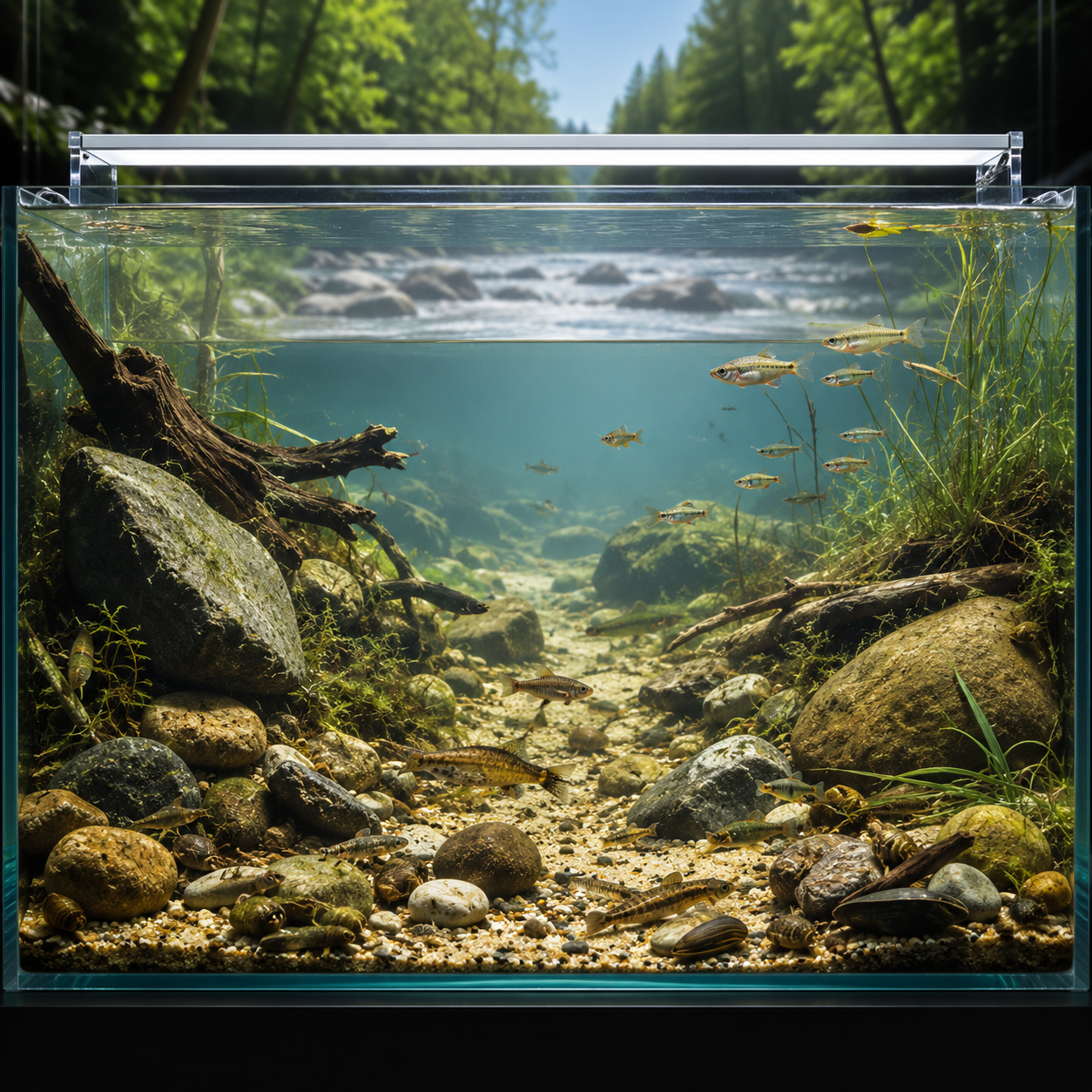
A biotope aquarium is the most scientifically rigorous form of freshwater fishkeeping. Rather than arranging fish and plants for visual appeal alone, a biotope setup recreates a specific, real-world natural habitat — using only the fish, plants, substrate, and water chemistry that would actually occur together in one location. The result is one of the most ecologically authentic and visually compelling aquarium formats possible.
What Makes a True Biotope?
A biotope must use only species that:
- Are native to the same geographic region
- Share the same water body type (same river, lake, or stream type)
- Experience the same seasonal water parameters in nature
- Are found at the same depth and habitat within that water body
For example: a Rio Negro (Brazilian Amazon) biotope would include cardinal tetras, altum angelfish, pencilfish, apistos, catappa leaves and botanicals, black fine sand, driftwood, and very soft, acidic water (pH 4.5–5.5, TDS < 50 ppm). It would NOT include Malaysian driftwood, Southeast Asian fish, or neutral water parameters.
Popular Biotope Types for Singapore Hobbyists
1. Amazon Blackwater Biotope (Rio Negro)
Water: pH 4.5–5.5, GH < 2°, TDS 10–60 ppm, amber-coloured Substrate: White or light tan fine sand (quartz) Hardscape: Catappa leaf litter, smooth driftwood, seed pod botanicals, no rocks Fish: Cardinal tetras, apistogramma, pencilfish (Nannostomus), altum angelfish Plants: Minimal — few plants grow in such acidic, low-mineral water; floating plants only in most authentic versions
2. Southeast Asian Peat Swamp Biotope (Borneo/Sumatra)
Water: pH 4.0–5.5, very soft, stained dark amber Substrate: Fine dark sand Hardscape: Peat, catappa leaves, seed pods, submerged wood Fish: Chocolate gourami, licorice gourami, Betta imbellis, Boraras species, Dario species Plants: Minimal — floating plants and mosses only; most plants cannot survive at this pH
3. African Great Lake Biotope (Lake Malawi)
Water: pH 7.8–8.5, GH 10–20°, KH 8–15°, hard and alkaline Substrate: Light-coloured sand or crushed coral Hardscape: Limestone rocks stacked to create caves and overhangs Fish: Cichlids only — Mbuna species (rock-dwelling), Utaka cichlids (open water) Plants: None — cichlids uproot plants and natural Lake Malawi rocky zones are largely plantless
4. Southeast Asian Clearwater Stream Biotope
Water: pH 6.5–7.5, moderate hardness, clear and well-oxygenated Substrate: Sand and smooth pebbles Hardscape: Round river stones, some driftwood, no leaf litter Fish: Danios, barbs, hillstream loaches, Devario species Plants: Low-growing plants: Cryptocoryne, java moss on rocks, Bucephalandra
5. South American Clearwater River Biotope (Rio Xingu)
Water: pH 6.0–7.0, moderate hardness, clear Substrate: Sand with smooth rocks Fish: Royal plecos, zebra plecos (L-number plecos), festivum cichlids Plants: Minimal — few plants in the natural flowing river environment
How to Research a Biotope
- Select a location: Choose a specific body of water (Rio Negro, Borneo's Kapuas basin, Lake Tanganyika)
- Research fish distributions: Use Fishbase.org to confirm which species co-occur in that specific location
- Research water parameters: Published scientific papers and aquarium society resources document natural parameters for major biotope locations
- Source appropriate hardscape: Match substrate type and hardscape materials to documented natural conditions
- Match seasonality if breeding: Many biotope fish breed in response to seasonal parameter changes (dry season/rainy season mimicking)
Biotope vs. Biotope-Inspired
A strict biotope uses zero non-native species. A biotope-inspired tank uses the aesthetic and general parameters of a natural location but may include species from nearby regions. For display and home aquariums, biotope-inspired setups are more practical — strict biotopes can be extremely limiting in fish species availability.
Browse our specialist livestock and botanical collection for biotope-relevant species and materials.