

How to Clean Aquarium Test Tubes and Keep Test Kits Accurate
Liquid aquarium test kits like the API Freshwater Master Test Kit are the most accurate way to test your water at home — but their accuracy depends entirely on clean test tubes. Residual reagent, mineral staining, and algae growth in test tubes throw off colour comparisons and lead to false readings. Here's how to keep them clean.
Why Test Tube Cleanliness Matters
Colour-matching test kits work by comparing the colour of your reacted water sample against a reference card. Even a slight yellow tint from old reagent residue, or a mineral deposit on the glass, shifts the perceived colour and produces a false reading.
This matters most for:
- Ammonia tests: The difference between 0 ppm and 0.25 ppm is a very subtle colour shift — easy to misread in a dirty tube
- Nitrate tests: Reagent residue can make a reading appear higher than actual
After Each Test
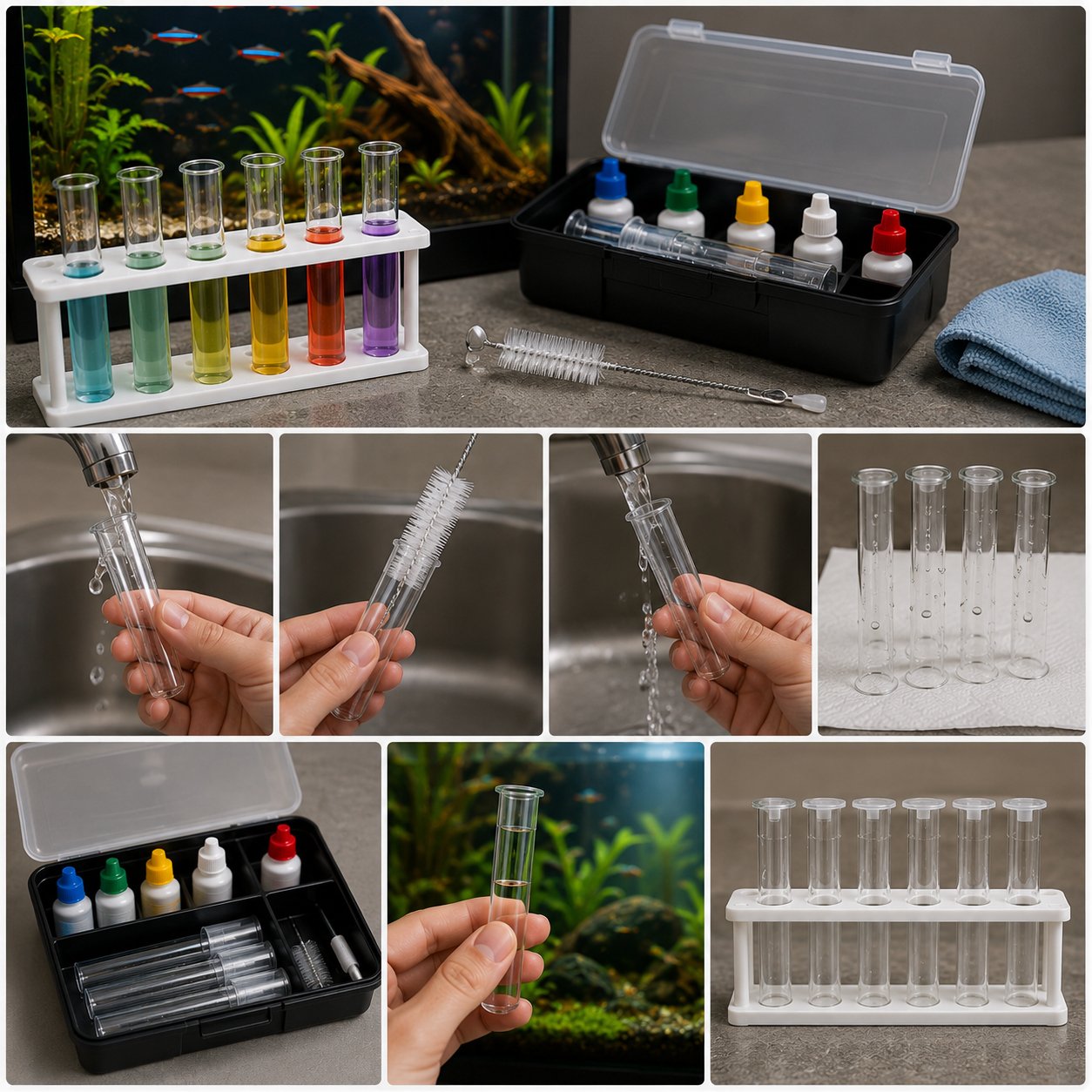
- Rinse immediately — rinse each test tube 3 times with tap water while the reagent is still liquid
- Shake dry — shake excess water from the tube
- Air dry upside down — place tubes inverted on a clean cloth or tube rack
The most important step is rinsing immediately while the reagent is still soluble. Dried reagent is significantly harder to remove.
Weekly Deep Cleaning
For Mineral Staining and Dried Reagent
- Fill test tubes halfway with white vinegar
- Allow to soak for 15–30 minutes
- Shake vigorously and rinse thoroughly with clean water 5–6 times
- For stubborn staining, use a test tube brush (a soft small brush that fits inside the tube)
For Algae Growth Inside Tubes
If test tubes are stored in a light-exposed area, algae can grow inside them:
- Add 5–10 drops of 10% bleach solution and fill with water
- Soak for 20–30 minutes
- Rinse extremely thoroughly — 8–10 rinse cycles with clean water
- Leave tubes to air dry fully before next use
Storage Best Practices
- Store test tubes in a dark location — light promotes algae growth inside the tube
- Keep the test kit lid closed when not in use
- Store reagent bottles upright and away from heat — Singapore's temperatures can degrade reagents faster than in temperate climates
- Check reagent expiry — most API reagents last 3 years from manufacturing date
Reading Results Accurately
- Always read the colour in natural daylight or under a white LED lamp
- Hold the tube against the white side of the colour card, not the printed colour — compare from the side
- Read immediately after the reaction time stated on the instructions — some colours shift slightly if left too long
Browse our water testing range — API test kits and replacement test tubes available in Singapore.