

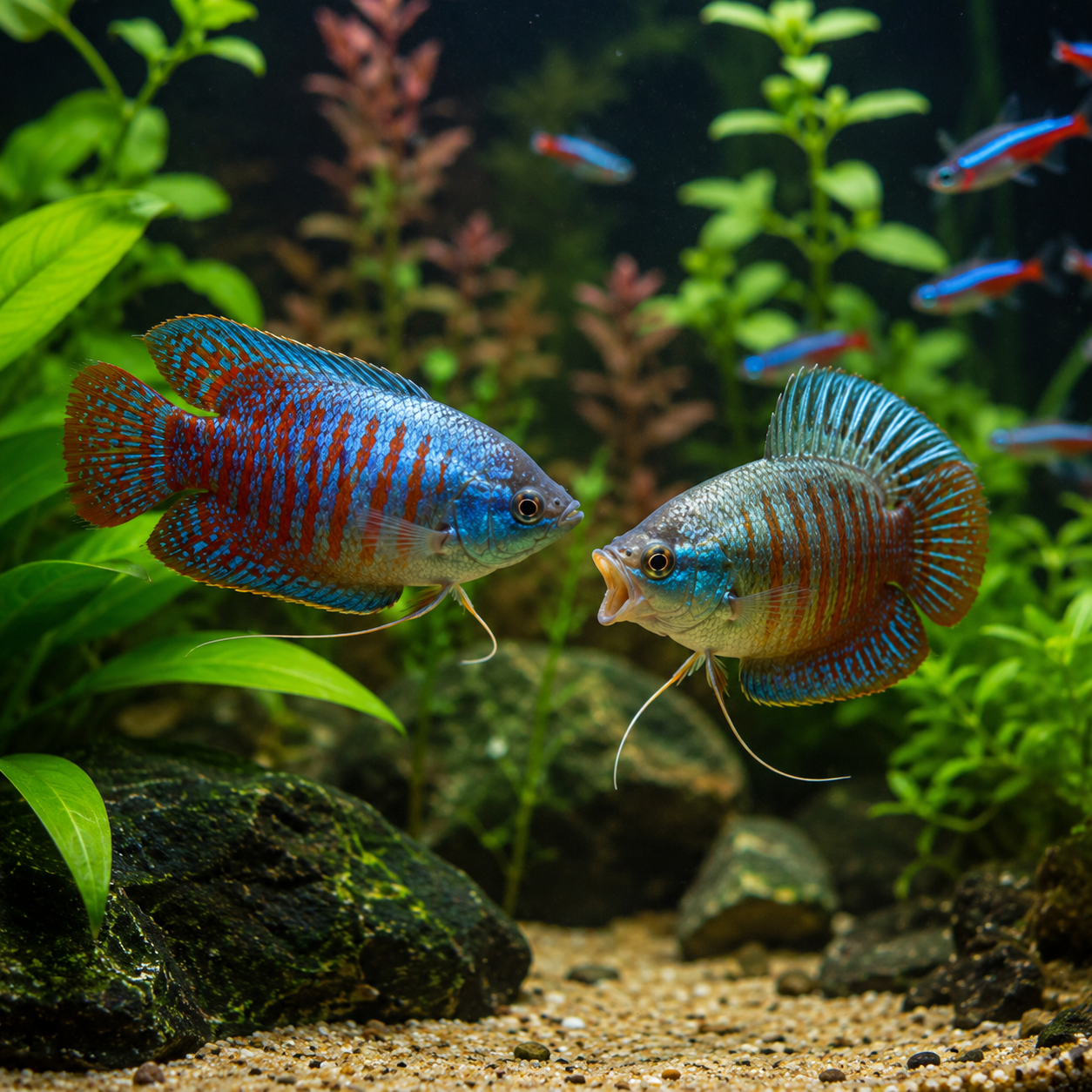
Why Are My Fish Chasing Each Other? Aggression, Breeding, or Normal Behaviour?
Fish chasing in an aquarium can mean many things — from completely normal courtship and play to dangerous territorial aggression that will injure or kill tankmates. Learning to tell the difference is an essential skill for every aquarium keeper.
Is the Chasing Normal or Problematic?
Ask these questions first:
- Is the chased fish injured? Check for missing scales, torn fins, or wounds.
- Is the chased fish hiding constantly or unable to eat? Chronic stress from chasing is as harmful as physical injury.
- Is one fish doing all the chasing, or is it mutual? Mutual brief chases are often social; one-sided relentless chasing is concerning.
- Has this just started, or is it new behaviour? Sudden new aggression often has a trigger.
Common Causes of Chasing
1. Breeding and Courtship Behaviour
Males chasing females is extremely common in livebearers (guppies, platies, mollies) and many cichlids. This is normal breeding behaviour, but it becomes a problem when:
- There are too few females per male
- The female has nowhere to hide and escape
- Chasing is relentless and the female cannot rest or eat
Solution: Maintain a ratio of at least 2–3 females per male for livebearers. Add dense planting for cover. In extreme cases, separate the male temporarily.
2. Territorial Defence
Many fish establish territories — especially cichlids, bettas, and some loaches. They will chase any fish that enters their defined zone. This is normal but can become dangerous in small tanks where escape is impossible.
Solution: Increase tank size, add more hardscape and plant cover to break lines of sight, or remove the territorial fish to a species-appropriate setup.
3. Feeding Competition
Fast, aggressive feeders will chase slower fish away from food. This is common with barbs, cichlids, and large gouramis.
Solution: Feed in multiple spots simultaneously. Use slow-sinking food for slower fish. Feed more frequently in smaller amounts to reduce competition.
4. Hierarchy Establishment
When new fish are added to an existing community, existing fish may chase newcomers to establish a social hierarchy. This typically resolves within 48–72 hours as the hierarchy is established.
Solution: Rearrange decorations when adding new fish to disrupt existing territories. Feed the tank before introducing newcomers to reduce competition-driven aggression.
5. Species Incompatibility
Some species simply should not be kept together:
| Problematic pairing | Issue |
|---|---|
| Tiger barbs + slow fancy guppies | Tiger barbs systematically nip fins |
| Male bettas + any flowing-finned fish | Betta attacks fish it perceives as rivals |
| Larger cichlids + small tetras | Predation, not aggression |
| Multiple male bettas | They will fight until one dies |
Solution: Separate incompatible species permanently.
When to Intervene Immediately
Intervene immediately if:
- You see blood, torn fins, or missing scales
- The chased fish is unable to reach food
- The chased fish is hiding 24/7 and breathing rapidly
- Chasing is constant with no breaks
Immediately separate the aggressive fish into a quarantine tank to allow the victim to recover.
Browse our community livestock collection — all species on FishyHub are listed with compatibility notes.