
Floating Plants vs Rooted Plants: Which Is Better for Your Aquarium?
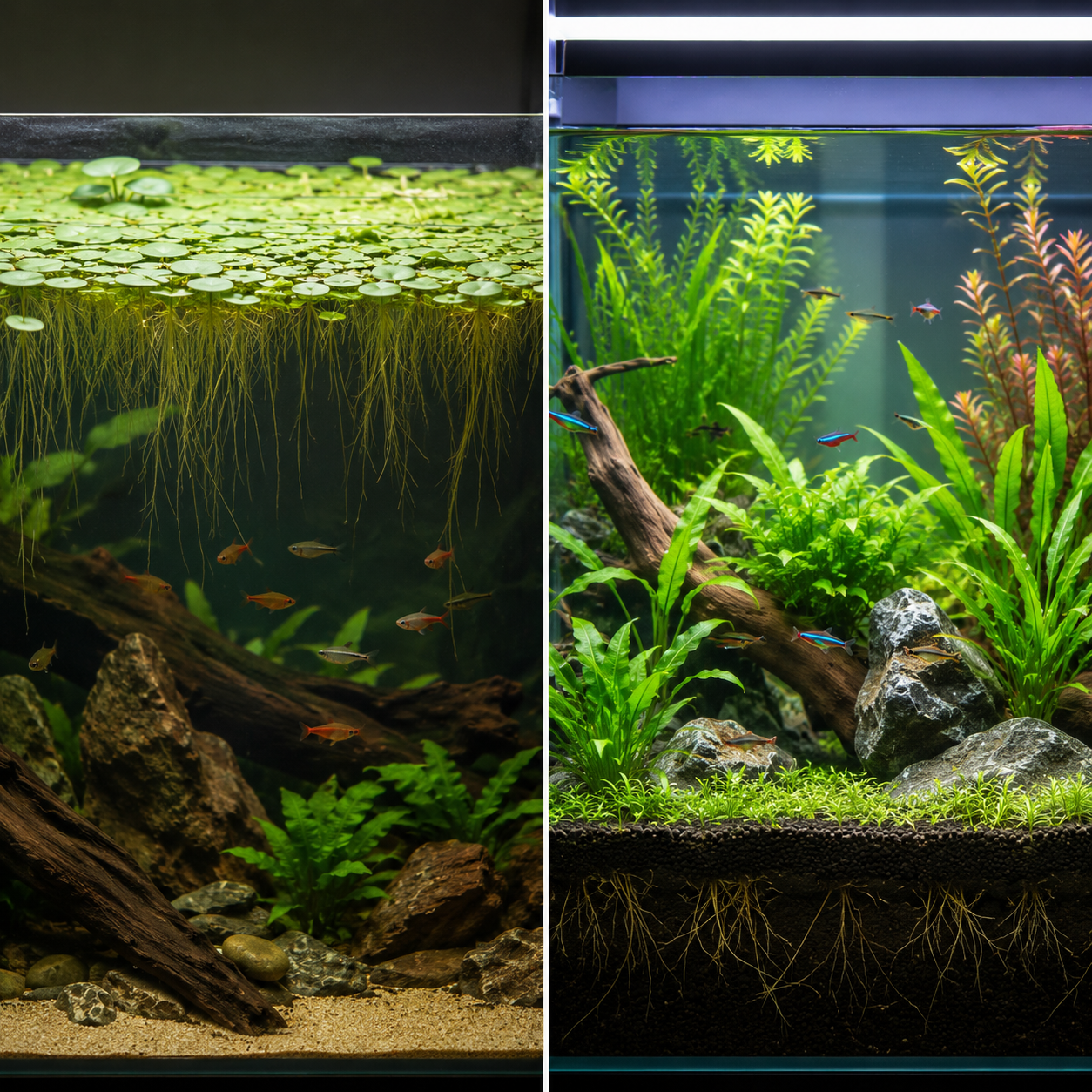
Not all aquarium plants grow the same way. Floating plants drift at the surface, absorbing nutrients directly from the water and providing shade. Rooted plants anchor in the substrate, drawing nutrients from both the water column and the substrate itself. Both have unique roles in a healthy planted tank, and the best setups often include both.
Floating Plants
Floating plants include species like frogbit, water sprite, salvinia, and duckweed. They float freely at the surface, growing emersed leaves in air-open tanks and submerged leaves below the waterline.
Benefits
- Rapid nitrate absorption: Floating plants are among the most efficient biological filters in the hobby. Their roots draw nitrogen directly from the water column and can outcompete algae for nutrients.
- Surface cover for shy species: Fish and shrimp that feel exposed in open water (bettas, chocolate gouramis, shrimp) benefit enormously from floating plant cover.
- Shade and dappled lighting: Dimming harsh light reduces stress in fish from blackwater and shaded natural habitats.
- Fry protection: Newborn fry hide among floating plant roots away from adult fish.
- Zero substrate required: Ideal for bare-bottom or sand setups.
Disadvantages
- Can block all light: Fast-growing floaters like frogbit and salvinia double in size rapidly. Left unmanaged they will shade the entire tank and kill submerged plants.
- Not suitable for all setups: High-flow filtration, strong surface agitation, and covered tanks make floating plants difficult to keep.
Rooted Plants
Rooted plants include the vast majority of aquarium plants — swords, cryptocorynes, stem plants, carpeting species, and epiphytes tied to hardscape.
Benefits
- Aquascaping structure: Rooted plants define the layout — foreground carpets, midground focal points, background walls of stem plants. Floating plants cannot provide this structure.
- Substrate nutrient uptake: Rooted plants in nutrient-rich substrate (aquasoil, root tabs) access a nutrient source floating plants cannot.
- Permanent positioning: Unlike floating plants, rooted species stay exactly where you place them.
- Wide variety: From tiny HC Cuba carpet to towering amazon swords, rooted plants offer far more visual variety.
Disadvantages
- Require substrate: Most need at least 5–7 cm of substrate for healthy root development (epiphytes like anubias and java fern are exceptions).
- More demanding overall: Many rooted species need CO2 and/or fertilisation for healthy growth.
Which Should You Choose?
The answer for most tanks is both:
| Tank type | Recommendation |
|---|---|
| Shrimp tank | Both — floaters for shade and cover, mosses for grazing |
| Community planted tank | Primarily rooted, some floating to soften lighting |
| Blackwater tank | Floating plants essential for natural dappled light |
| Aquascape display tank | Rooted only — floating plants disrupt the designed layout |
| Bare-bottom breeding tank | Floating plants only |
Browse our full plant collection for both floating and rooted species available in Singapore.