

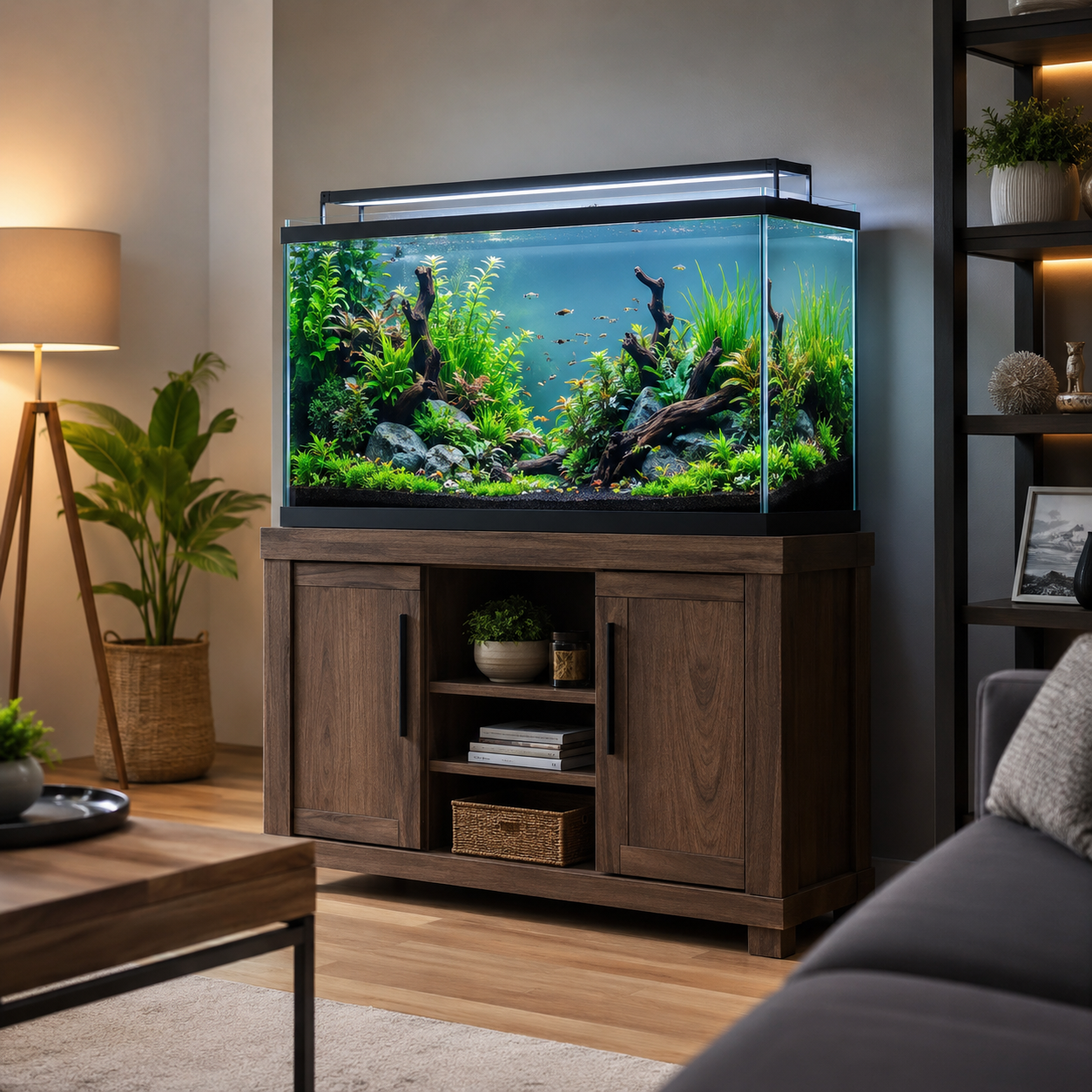
How to Choose an Aquarium Stand for Safety, Style, and Weight Support
An aquarium stand is one of the most structurally critical pieces of equipment in your setup — and one of the most overlooked. A stand that fails under load can mean a cracked tank, flooded room, and lost livestock. Here's how to choose the right stand for your aquarium.
Step 1: Calculate Your Tank's Total Weight
A water-filled aquarium weighs far more than the tank itself. Use this rule of thumb:
Full weight ≈ tank volume × 1 kg/litre + tank glass/acrylic weight + substrate + equipment
Practical examples:
- 60-litre tank: approximately 75–90 kg fully set up
- 100-litre tank: approximately 120–140 kg
- 200-litre tank: approximately 240–260 kg
Your stand must be rated to hold at least this weight continuously, for years, without deforming.
Step 2: Choose the Right Material
Wooden Stands (MDF, Solid Wood, Plywood)
- Pros: Most customisable aesthetically; easy to add doors, paint, or stain; warm appearance
- Cons: MDF is vulnerable to moisture damage from spills and splashes. Low-quality MDF stands swell and fail over time in humid Singapore conditions.
- Recommendation: Solid wood or high-grade plywood stands with waterproof sealant are best. Avoid flat-pack MDF stands for tanks over 100 litres.
Metal Stands (Powder-coated Steel)
- Pros: Highest weight capacity; unaffected by moisture; often the strongest option per dollar
- Cons: Less visually refined; can rust if coating chips and is not maintained
- Recommendation: Best for large tanks (100+ litres) in utility or garage setups
Glass/Composite Stands
- Pros: Modern aesthetic; some include built-in sump space
- Cons: Heavy; expensive; limited availability in Singapore
Step 3: Match Stand Size to Tank
The stand must match your tank's footprint exactly. A stand that is too small creates an unsupported overhang — the weakest point in the setup. A stand that is too large is fine aesthetically but wastes floor space.
Critical: The entire base perimeter of the tank must rest on the stand surface. Even a few centimetres of unsupported glass at an edge creates a stress fracture risk.
Step 4: Check Levelness
A tank must be perfectly level. Any tilt puts uneven pressure on the glass seams. Always use a spirit level before filling, and place a thin foam mat between the tank and stand to distribute weight evenly across the full footprint.
Step 5: Consider Storage and Access
Most aquarium stands include a lower cabinet. This space is ideal for:
- Storing a sump filter
- Keeping a CO2 cylinder
- Organising water conditioners, fertilisers, and maintenance tools
Ensure the cabinet opening is large enough to access equipment without difficulty.
Weight Capacity Summary
| Tank size | Minimum stand rating |
|---|---|
| 30–60 litres | 80–100 kg |
| 60–100 litres | 120–160 kg |
| 100–200 litres | 200–280 kg |
| 200+ litres | 300+ kg |
When in doubt, choose a stand rated above your requirement. Stand failure is catastrophic and irreversible.
Browse our aquarium stands and hardware for options that match your tank footprint and load requirements.