

How to Choose Healthy Aquarium Fish Before Buying: Signs of Stress, Disease, and Poor Condition
The healthiest established aquarium can be derailed in a week by adding one diseased fish. Preventing disease entry through careful selection is more effective, cheaper, and less stressful for your fish than treating an outbreak after it happens. Here is a systematic approach to assessing fish health before buying.
Step 1: Assess the Source Tank
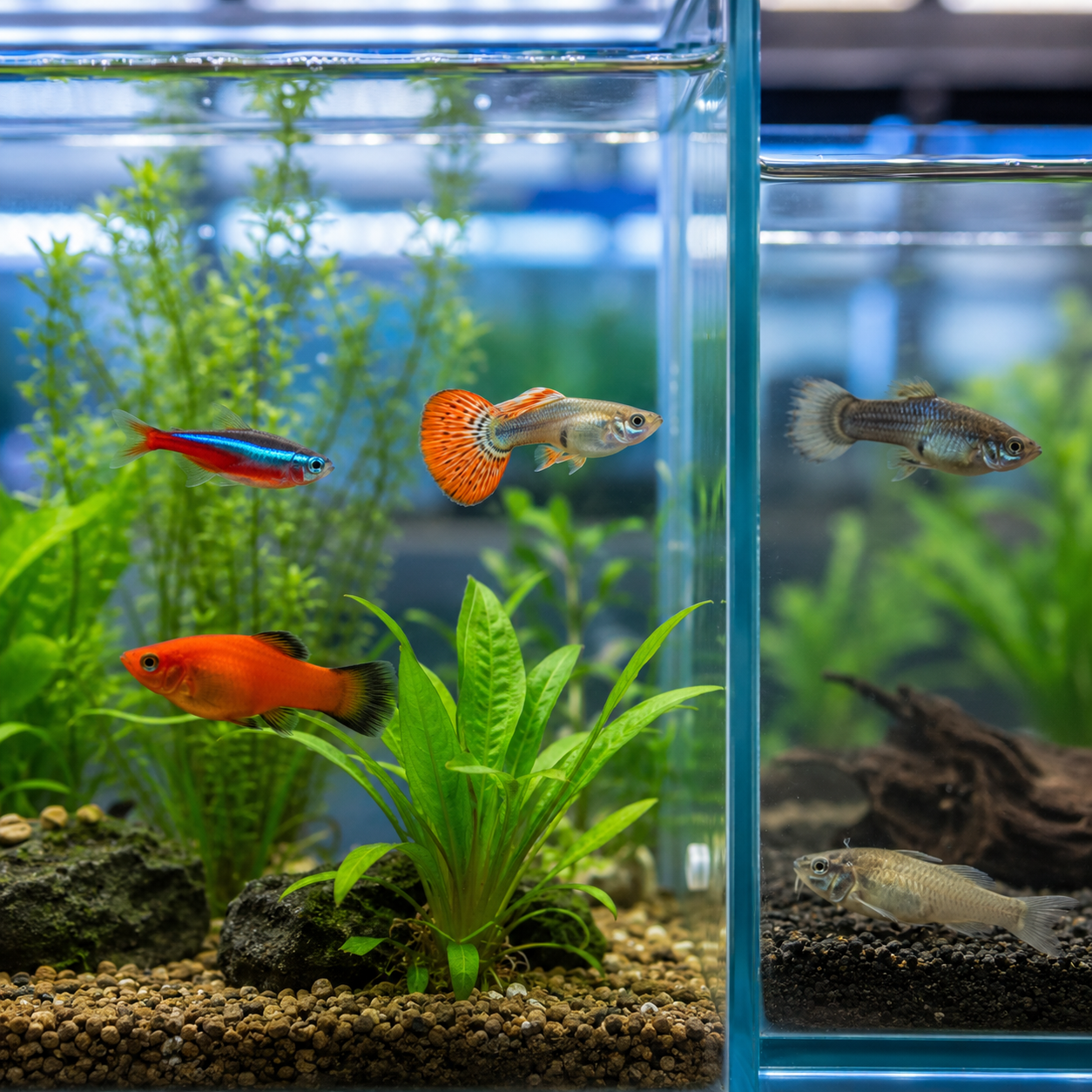
Before looking at individual fish, spend 60 seconds observing the tank they are kept in:
Green flags:
- Water is clear and clean
- All fish appear active and alert
- No dead fish in the tank or net traps
- Fish actively feeding if food is visible
- Tank is not overcrowded for its size
Red flags — do not buy from this tank:
- Any dead fish in the tank (raises ammonia; spreads disease)
- Fish with visible symptoms even if the fish you want appears healthy — they share the same water
- Cloudy, milky, or foul-smelling water
- Fish gasping at the surface or clustered at the filter outlet (low oxygen or poor water quality)
- Extremely overcrowded conditions (chronic stress compromises immune systems)
Step 2: Examine Body Condition
Body Shape
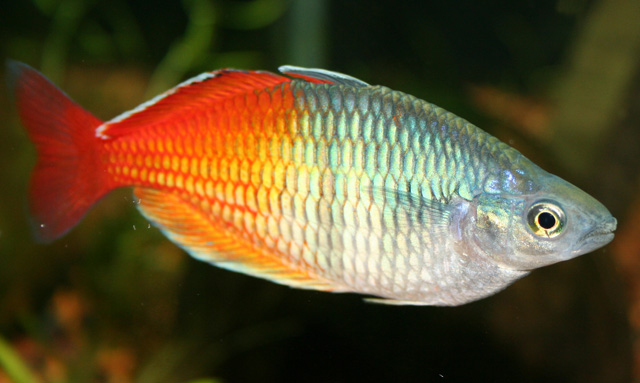
Healthy: Full, rounded body for the species. The belly should be gently curved, not sunken.
Warning signs:
- Hollow or concave belly — indicates starvation, internal parasites, or wasting disease
- Bloated, asymmetrically swollen belly — dropsy (severe bacterial infection); avoid entirely
- Visible spine from above — serious emaciation
Skin and Scales
Healthy: Smooth, intact scales lying flat against the body; no visible lesions.
Warning signs:
- White granular spots like salt or sugar (ich/white spot — extremely contagious)
- Fine gold or rusty dust over the body (velvet/oodinium — contagious; very serious)
- Raised or pinecone-splayed scales (dropsy)
- Ulcers, open wounds, or red patches (bacterial infection)
- Excess mucus or grey-white slime coating
Step 3: Check Fins
Healthy: Fins fully extended and clear; no fraying, holes, or discolouration.
Warning signs:
- Clamped fins (fins held tight against the body) — primary sign of stress or illness
- Ragged, torn, or frayed fin edges — fin rot (bacterial or fungal)
- White edges on fins — early fin rot
- Black edges on fins — healing fin rot (actually a positive sign if buying a fish in recovery)
Step 4: Observe Eyes
Healthy: Clear, bright eyes that are flush with the head or very slightly protruding (species-dependent).
Warning signs:
- Cloudy or milky eyes — injury or infection
- Excessively protruding eyes (pop-eye / exophthalmia) — bacterial infection; can be treated but indicates immune compromise
Step 5: Watch Breathing
Healthy: Steady, regular gill movement at a rate appropriate to the species' activity level and water temperature.
Warning signs:
- Rapid, laboured gill movement (oxygen deficiency, gill flukes, or ammonia/nitrite poisoning)
- Fish gulping at the water surface (oxygen deficiency)
- One gill flap that appears to move more than the other (gill damage or gill flukes)
Step 6: Observe Movement and Behaviour
Healthy: Active, alert fish that responds to external movement. Schools stay together. Fish hold position in the water column comfortably.
Warning signs:
- Fish hovering near the surface or hanging at the bottom
- Loss of equilibrium — swimming sideways, spinning, or inability to maintain depth (swim bladder problem)
- Scratching against rocks, glass, or substrate (ectoparasites — ich, velvet, flukes)
- Isolated individual fish away from the school (often the first to show illness)
- Loss of schooling behaviour in normally schooling species
Quick Assessment Checklist
- Tank is clean; no dead fish present
- Fish is actively swimming with fins extended
- Body is full — no hollow belly or visible spine
- No white spots, gold dust, or lesions on skin
- Fins intact — no rot, fraying, or clamping
- Eyes clear and appropriate size
- Breathing regular — not gasping
- Behaving normally for the species
Browse our freshwater livestock collection — all fish are assessed before listing and packed with care for Singapore delivery.