
How to Choose a Schooling Fish for Your Aquarium
Schooling fish are among the most visually rewarding fish you can keep — but only when the conditions are right. Too few individuals, the wrong tank size, or incompatible water parameters will leave your school scattered, stressed, and paling in colour. Here's a complete buying guide for schooling fish.
Step 1: Know Your Tank Size
Schooling fish need horizontal swimming space. The minimum tank sizes below apply to standard groups:
| Species | Min. group | Min. tank |
|---|---|---|
| Chili rasbora | 20 | 30 litres |
| Ember tetra | 10 | 30 litres |
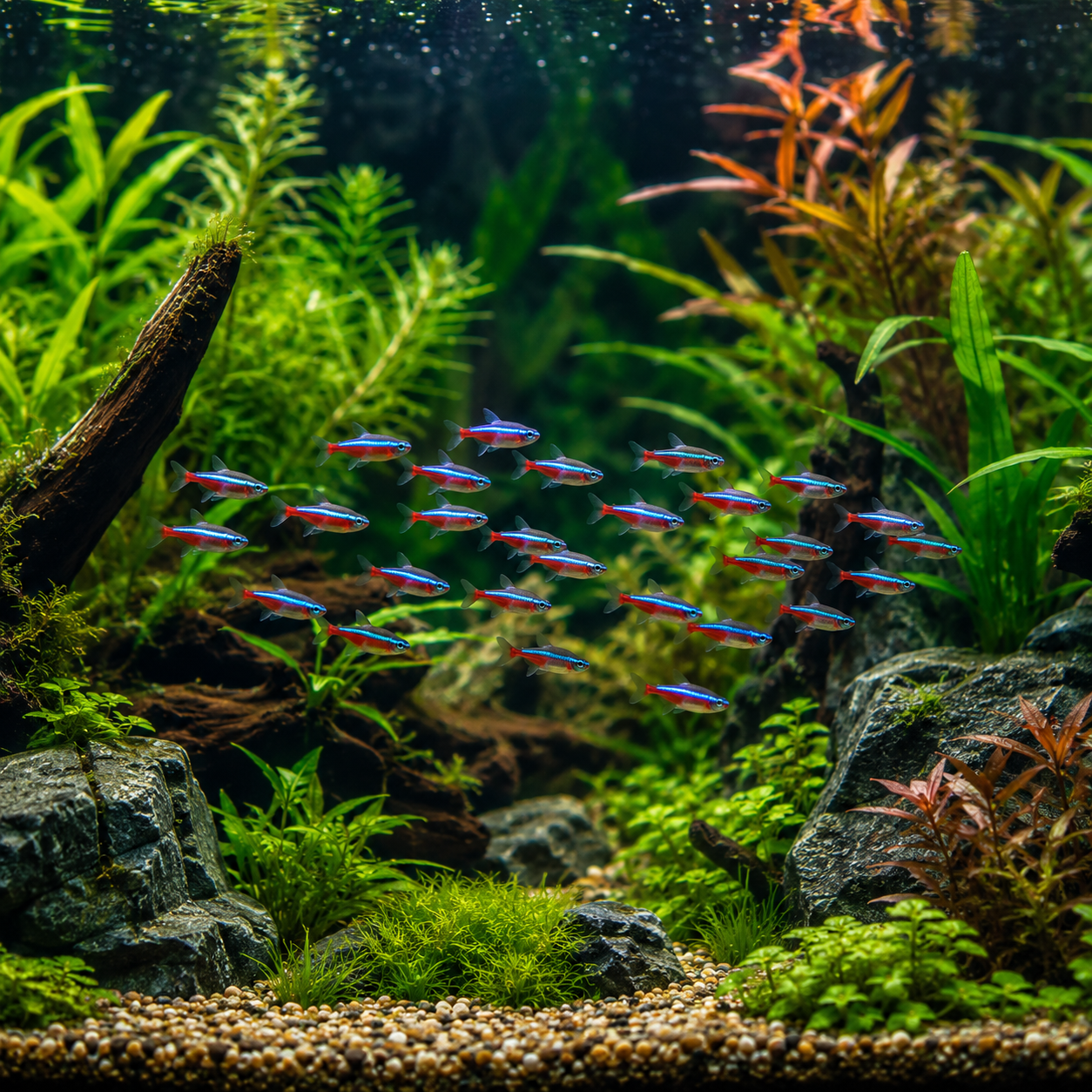
| Neon/cardinal tetra | 10 | 60 litres |
| Rummy nose tetra | 15 | 80 litres |
| Harlequin rasbora | 10 | 60 litres |
| Tiger barb | 8 | 80 litres |
For a truly impressive display, double or triple these minimums.
Step 2: Match Water Parameters
Not all schooling fish share the same water requirements. Mixing species with incompatible needs leads to either compromising one species' health or constant parameter management.
Compatible group example (soft, slightly acidic water — Singapore tap):
- Cardinal tetras + harlequin rasboras + corydoras sterbai
Compatible group example (harder water):
- Cherry barbs + zebra danios + bronze corydoras
Incompatible pairing to avoid:
- Cardinal tetras (soft, acidic) + mollies (hard, alkaline)
Step 3: Decide on True Schoolers vs Shoalers
- True schoolers move in tight formation and turn together: rummy nose tetras, cardinal tetras
- Shoalers prefer company but move independently: most rasboras, barbs
Both look impressive in large numbers — but if you specifically want the synchronised movement, choose rummy nose tetras.
Step 4: Consider Activity Level
Some schooling fish are peaceful and slow-drifting (ember tetras, chili rasboras); others are fast and boisterous (zebra danios, tiger barbs). Matching activity level to your other tankmates prevents stress:
- Slow-moving fish (bettas, slow fancy guppies) should not be kept with fast, nippy schoolers like tiger barbs
- Shy bottom-dwellers (corydoras, small loaches) are easily stressed by very active surface schoolers
Step 5: Choose the Right Number
The biggest mistake beginners make with schooling fish is buying too few. Rules of thumb:
- Minimum functional school: 8–10 individuals for most species
- Display-quality school: 15–20+
- Species that school tightest at: 25+ (rummy nose, cardinal tetra)
A school of 6 tetras in a 120-litre tank looks lost and scattered. A school of 25 in the same tank looks spectacular.
Step 6: Source Healthy Stock
Look for:
- Fish swimming actively together as a group, not isolated individuals at the surface or bottom
- Full, rounded bellies
- No clamped fins, white spots (ich), or visible lesions
- Consistent colouration across the group
Final Buying Checklist
- Tank is at least minimum recommended size
- Water parameters match species requirements
- Buying 15+ individuals for best display
- Species is compatible with existing tankmates
- No signs of disease in the vendor's tank
Browse our freshwater livestock and shop our full range of schooling species available now in Singapore.