

Iwagumi Aquascape Guide: Stones, Layout Rules, Plants, and Fish Choices
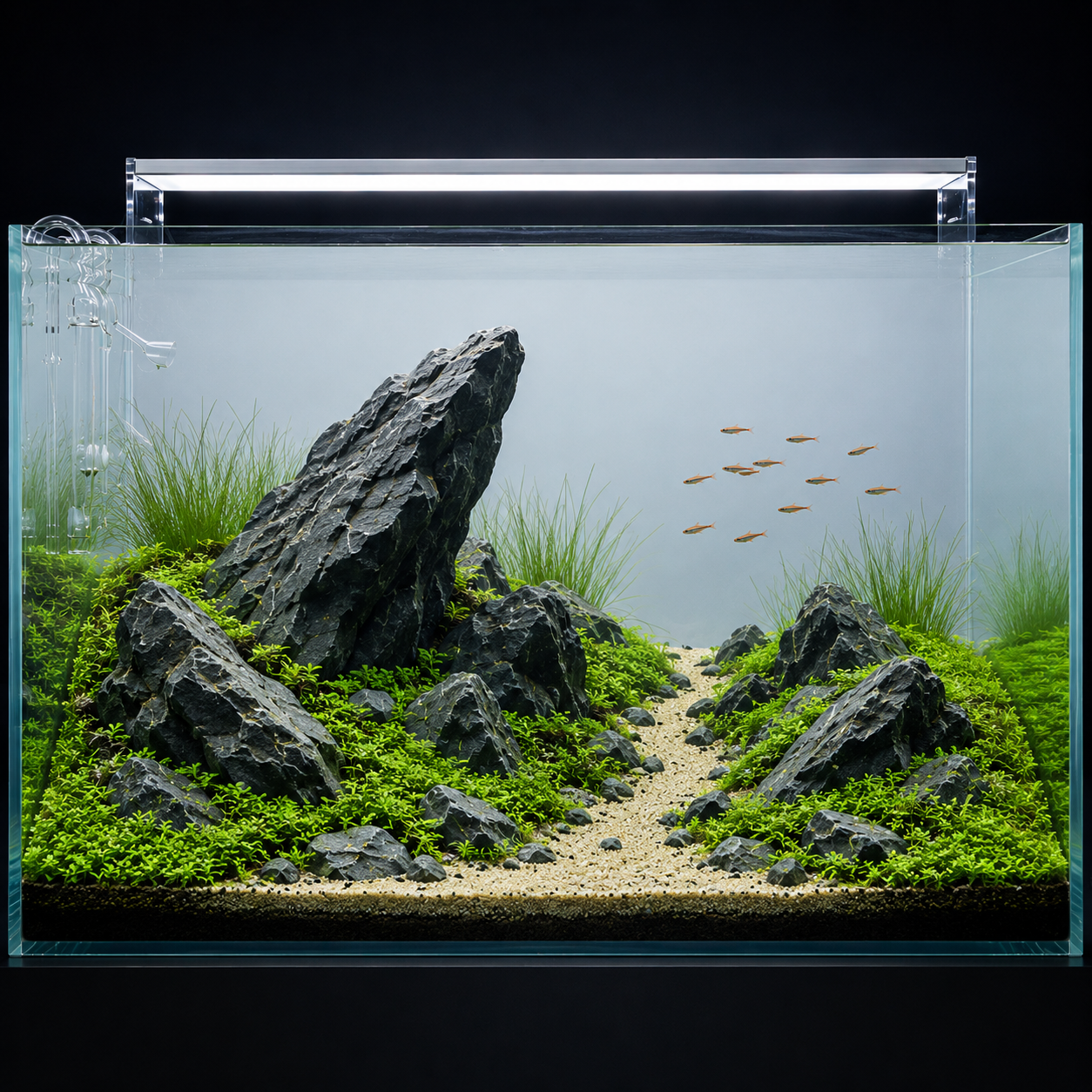
Iwagumi (岩組) translates from Japanese as "rock formation" — and that is exactly what this style is. Pioneered by Takashi Amano, Iwagumi is the most minimalist aquascape style: bare substrate, a single species of carpeting plant, and carefully placed stones arranged to evoke natural Japanese rock gardens. It is simultaneously the simplest concept and the most technically demanding execution in planted aquariums.
The Philosophy
Iwagumi borrows from the Japanese art of garden stone arrangement (suiseki) and the Zen principle that constraint creates beauty. The fewer elements you use, the more precise each one must be. A single misplaced stone or uneven carpet destroys the composition entirely.
The Three Stones: Oyaishi, Fukuishi, Soeishi
Traditional Iwagumi uses three primary stones:
| Stone | Japanese name | Role |
|---|---|---|
| Primary (largest) | Oyaishi (親石) | Dominant focal stone; placed at Golden Ratio position |
| Secondary | Fukuishi (副石) | Supporting stone; faces inward toward Oyaishi |
| Accent | Soeishi (添石) | Small accent; completes the trio |
Additional small accent stones (Suteishi — "sacrificial stones") may be scattered to create a natural, unstyled feeling. All stones must:
- Be the same species (Seiryu, Manten, or Ohko dragon stone)
- Face the same direction (typically tilted slightly toward the viewer)
- Have the same grain direction — mixing grain directions makes the arrangement look unnatural
Layout Rules
Golden Ratio Placement
The Oyaishi is placed at the Golden Ratio intersection — approximately 60% from one side and 40% from the other. In a 60 cm tank this is approximately 36 cm from the left or right wall.
Stone Angle
All stones are tilted at the same angle — usually 10–20° toward the viewer. This creates a consistent directional energy through the layout.
Partially Buried
At least one-third of each stone should be buried in the substrate. Stones sitting flat on substrate look placed; stones partially buried look grown-in.
Carpeting Plants for Iwagumi
Iwagumi typically uses a single species of foreground carpet across the entire visible substrate:
| Plant | Difficulty | Notes |
|---|---|---|
| HC Cuba | Very hard | The classic Iwagumi carpet; tiny, dense, immaculate |
| Eleocharis 'Mini' | Moderate | Fine grass; grows faster than HC Cuba |
| Glossostigma elatinoides | Hard | Slightly larger leaf than HC Cuba; classic choice |
| Monte Carlo | Moderate | Rounder leaf; slightly more forgiving |
Water Column and Maintenance
Achieving the "HC Cuba carpet wall-to-wall" look requires:
- High light (60–100 PAR at substrate)
- Pressurised CO2 (consistent 30 ppm dissolved CO2)
- Weekly 50% water changes during establishment
- Rigorous algae control (10+ Amano shrimp, otocinclus catfish)
Fish for Iwagumi
Fish choices must be restrained — the fish become part of the composition, not a distraction from it:
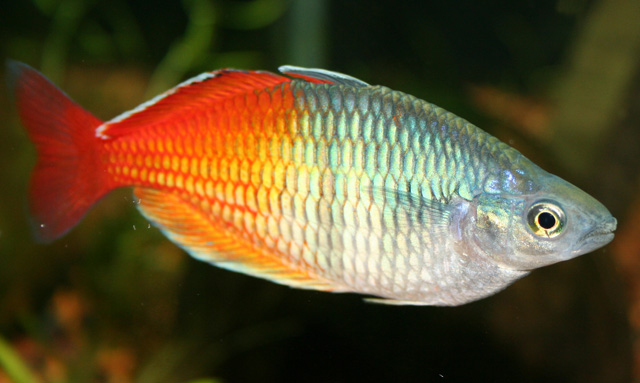
- Harlequin rasboras (15–20): Warm copper colour complements stone tones; classic Iwagumi companion
- Celestial pearl danios (10–15): Small, spotted; perfectly sized for smaller Iwagumi tanks
- Rummy nose tetras (20–30): Schools very tightly; adds kinetic energy to the layout
- No bottom-dwellers that disturb the carpet — avoid corydoras in a fresh Iwagumi setup until the carpet is fully established
The Three Golden Ratios
Amano's compositions consistently hit three Golden Ratio relationships simultaneously:
- Stone placement left-right
- Stone height relative to tank height
- Carpet extent relative to total visible substrate
This mathematical precision is why successful Iwagumi layouts look effortlessly natural — the proportions are pre-designed to feel right to the human eye.
Browse our Iwagumi hardscape, aquasoil, and carpeting plants — all available in Singapore.