

Shi Qing Poh
Author
6 August 2026
8 min read
Jungle Aquascape Guide: Creating a Wild, Low-Maintenance Planted Tank
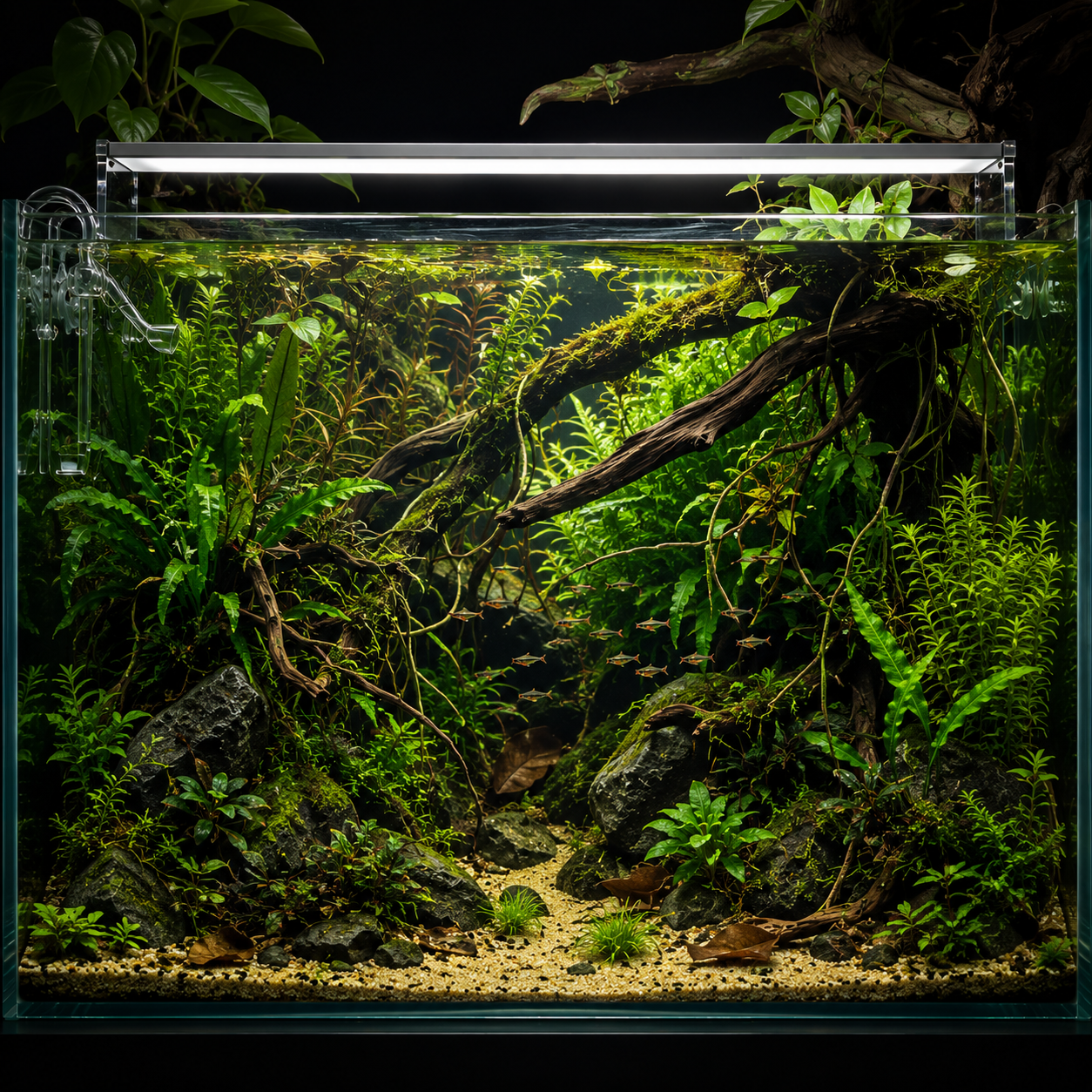
Jungle aquascaping is the antithesis of Iwagumi minimalism. Where Iwagumi demands millimetre-precise stone placement and a single carpet species, jungle aquascaping celebrates density, variety, and the slightly chaotic look of an untamed tropical forest floor. It is also, conveniently, one of the most achievable planted tank styles for hobbyists who want beauty without the extreme technical demands of high-tech competition layouts.
What Defines a Jungle Aquascape?
- Dense, overlapping planting: Plants grow into each other's space — the deliberate, manicured street structure of Dutch style is absent
- Mixed species and textures: Fine-leaved and broad-leaved, upright and trailing, foreground and background plants intermingle
- Large-leaved specimen plants: Echinodorus swords, tiger lotus, large cryptocorynes — species that would overwhelm a formal layout are at home in a jungle tank
- Natural, imprecise structure: Driftwood, roots, and rocks are used but not arranged with formal precision
- Minimal or no CO2: Most jungle tanks are low-tech or medium-tech — the style suits hardy, fast-growing plants that thrive in ambient conditions
Why Jungle Style Suits Singapore Hobbyists
- Lower maintenance commitment: Missing a weekly trim does not ruin the layout — growth into neighbouring plants is part of the aesthetic
- Forgiving of parameter fluctuations: Hardy jungle plants tolerate the temperature and light variations common in Singapore apartments
- No CO2 required for success: Most effective jungle plants grow well without injection
- Lower cost: Affordable, widely available species work perfectly — no rare specialist plants needed
Best Plants for Jungle Aquascaping
Large Specimen Plants (Background)
- Amazon sword (Echinodorus bleheri): Large rosette; grows to 40–60 cm; the classic jungle background anchor
- Red tiger lotus (Nymphaea zenkeri): Bulb-based; dramatic floating lily pads; trim floating leaves for control
- Vallisneria spiralis: Ribbon-like leaves that sway in current; fills background naturally
- Java fern (Microsorum pteropus): Broad-leaved; tie to driftwood; extremely hardy
Midground Texture
- Cryptocoryne wendtii (various): Rosette plant; many colour forms; very hardy
- Anubias barteri: Large, dark leaves; attached to hardscape or substrate
- Bolbitis heudelotii: Fern-like; attached to driftwood; loves flow from filter
Foreground and Ground Cover
- Java moss mat: Natural, irregular carpet; extremely hardy
- Cryptocoryne parva or C. willisii: Low-growing crypts; spread slowly but stay in place
- Staurogyne repens: Compact, bushy foreground without CO2 requirement (grows slower but survives)
Floating Plants (Essential for Jungle Look)
- Frogbit: Floating rosettes that create natural dappled shade
- Water sprite: Fast-growing surface cover; removes nutrients rapidly
Driftwood and Hardscape in Jungle Tanks
Driftwood is used abundantly — multiple pieces, overlapping, partially buried, covered in java moss and anubias. The goal is to look like submerged forest roots, not a composed rock garden. Types that work well:
- Spider wood / mopani wood: Complex branching structure; moss and java fern attach readily
- Malaysian driftwood: Dense, heavy; sinks without preparation; warm brown tones
- Cholla wood: Hollow tubes; shrimp habitat within the "roots"
Jungle Tank Setup (60 litre example)
| Element | Choice |
|---|---|
| Substrate | Any aquasoil or plain sand + root tabs |
| Filter | Canister or HOB; moderate flow |
| Lighting | Medium — 30–40 PAR; 8–10 hours |
| CO2 | Optional — DIY CO2 if desired |
| Main plants | Amazon sword + java fern + crypts + java moss |
| Floating plants | Frogbit |
| Hardscape | 2–3 pieces spider wood; no rocks needed |
Fish for Jungle Tanks
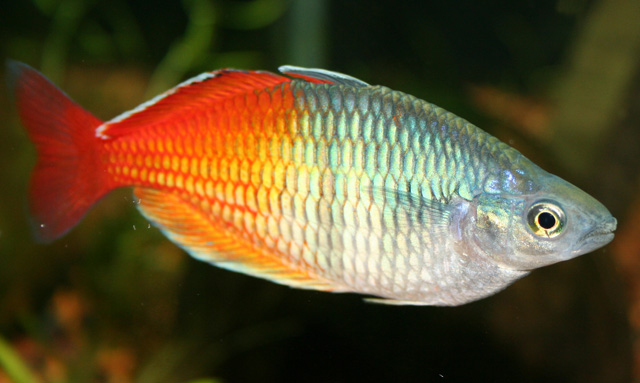
- Discus or angelfish (larger tanks): Look magnificent in the jungle overgrowth
- Bettas: Thrive in the shaded, complex structure
- Most tetras and rasboras: Natural with the dense background
- Corydoras: Perfect bottom-dwellers for a lush jungle substrate
Browse our jungle-suitable plants and driftwood range — available for delivery across Singapore.