

Why Is My Aquarium Surface Oily? Biofilm Causes and Simple Fixes
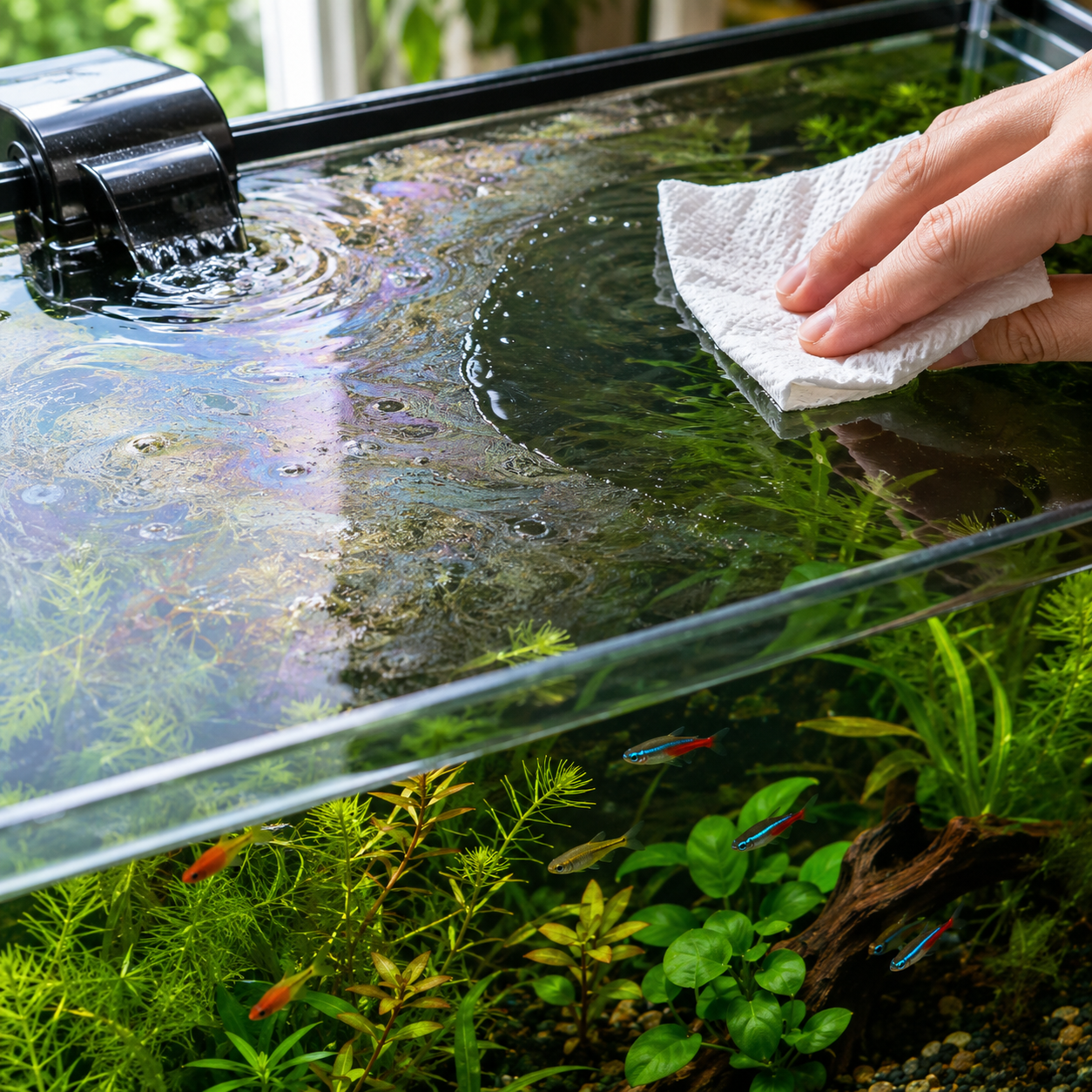
A shimmery, oily-looking film sitting on the surface of your aquarium water is called a surface biofilm or protein film. It is extremely common and, in most cases, not immediately dangerous — but it does indicate a problem worth addressing.
What Is the Surface Film?
The film is a layer of proteins, fats, and bacterial matter that accumulates at the air-water interface. In a healthy tank with good surface agitation, this film is constantly broken up and dissolved. When surface movement is reduced, the film consolidates and becomes visible.
Common Causes
1. Insufficient Surface Agitation
The most common cause. If your filter outlet is positioned below the waterline, it circulates water internally but creates no surface movement. With no surface agitation:
- CO2 and other gases cannot escape
- Dissolved oxygen exchange is reduced
- Surface proteins accumulate into visible film
Fix: Adjust the filter outlet to break the water surface. Angle the spray bar or output tube slightly upward so it creates gentle surface ripples.
2. Overfeeding
Excess protein from uneaten food accumulates rapidly and is a primary source of surface biofilm material.
Fix: Feed only what fish consume in 2–3 minutes. Remove uneaten food with a net or turkey baster after feeding.
3. New Tank Syndrome
In newly set up tanks (first 1–4 weeks), a biofilm is almost universal as bacterial populations establish. The beneficial bacterial colonies produce byproducts that contribute to the surface layer.
Fix: This typically resolves on its own as the tank matures. Increase surface agitation to speed the process.
4. Dead or Decaying Plant Matter
Rotting leaves and stems release oils and organic compounds that contribute to surface film.
Fix: Remove dead plant material during water changes. Prune stem plants before they decay from the base up.
5. Skincare and Household Contamination
Hand lotions, soaps, and cooking oils on your hands contaminate the water when you reach in. Even tiny amounts create a visible film.
Fix: Always rinse hands thoroughly (without soap) before putting them in the tank. Never use household cleaning products near an open tank.
Is It Harmful?
A light surface film is not immediately harmful but:
- It reduces gas exchange, which lowers dissolved oxygen over time
- Heavy biofilm can stress labyrinth fish (bettas, gouramis) that need to breathe air at the surface
- It indicates suboptimal water surface management
How to Remove It Quickly
Method 1: Surface skimmer A hang-on surface skimmer constantly pulls the surface layer through a fine filter, eliminating protein film entirely. This is the permanent solution.
Method 2: Paper towel method Lay a clean paper towel flat on the water surface and peel it back — it lifts the surface film with it. Repeat with fresh sheets until the film is gone. Quick and free.
Method 3: Adjust filter outflow Point the filter outlet to break the surface — this is usually enough to prevent future film buildup without needing a skimmer.
Browse our aquarium equipment and filtration range including surface skimmers available in Singapore.