

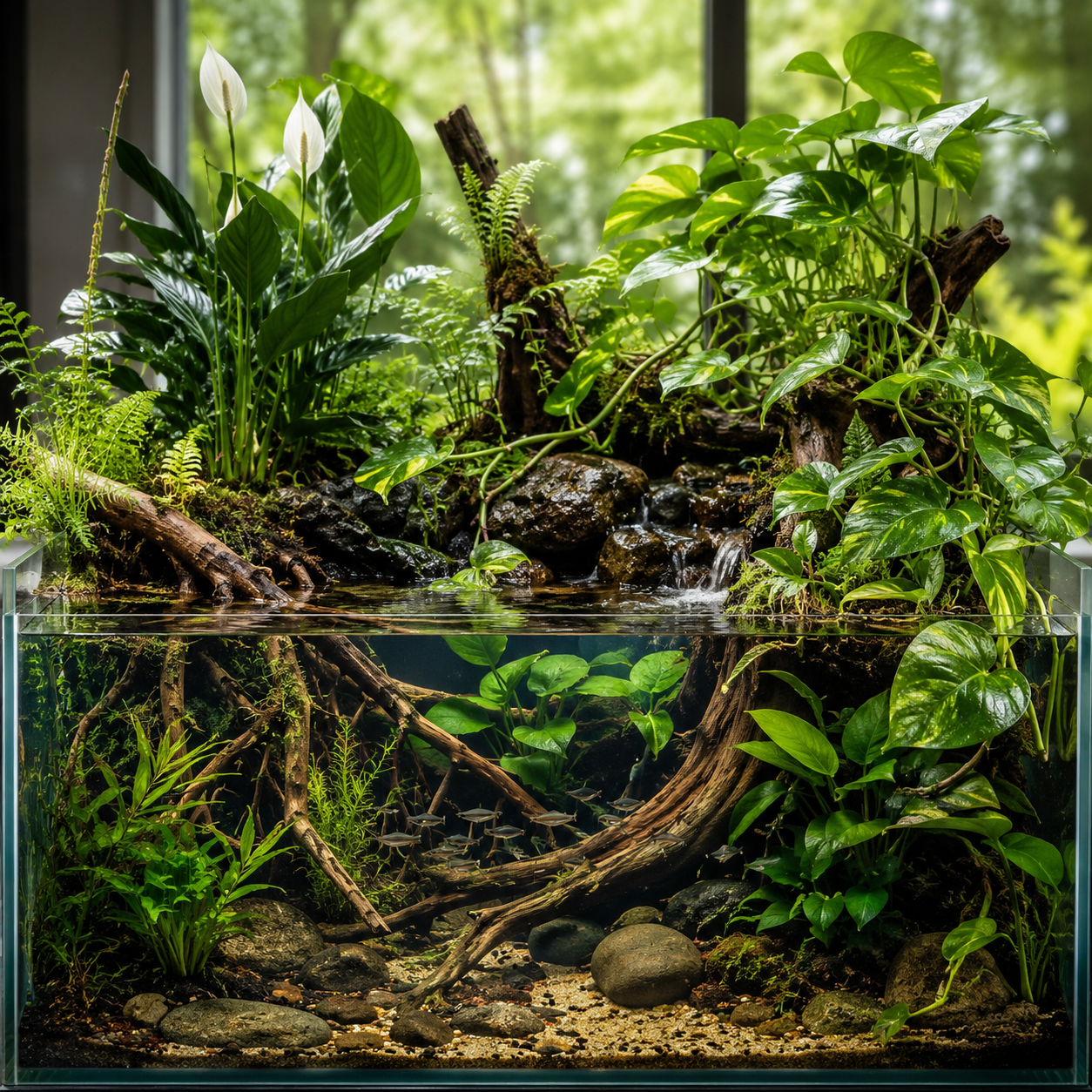
Riparium Guide: Creating an Aquarium with Emergent Plants and Natural Riverbank Style
A riparium is a specialised vivarium format that uses hanging planters clipped to the inside rim of a standard aquarium. Tropical plants grow in these planters with their roots reaching down into the aquarium water, while their stems and leaves grow upward and out of the tank — recreating the appearance of a natural tropical riverbank or flooded forest margin.
What Makes a Riparium Different?
Unlike a paludarium, which typically involves building a constructed land section or waterfall, a riparium achieves its above-water effect through a modular planter system:
- Standard aquarium tank — no structural modification needed
- Clip-on or suction-cup planters attached to the inside of the aquarium walls
- Plants grow emersed (in air) with roots submerged in the aquarium water
- Fish, shrimp, and aquatic plants occupy the water zone normally
- The effect is a lush, vertical wall of tropical foliage growing from the water
Why Ripariums Suit Singapore Apartments
- No construction required: Clip-on planters go in and out without permanent modification
- Use your existing tank: Any rimless or rimmed aquarium works
- Tropical plants thrive in Singapore's heat and humidity: Most suitable riparium plants are native to tropical regions similar to Singapore
- Compact and apartment-friendly: A 60-litre aquarium becomes a dramatic vertical display
Riparium Planter Systems
Commercial Riparium Planters
Specialised riparium planters (such as those from Riparium Supply) include:
- A basket or cup to hold growing medium and plant
- A clear acrylic backing plate with suction cups or clip mechanism
- Designed so plant roots hang through the base into the aquarium water
DIY Planter Alternatives
- Small mesh baskets lined with foam or sphagnum moss, attached with suction cups
- Sections of PVC pipe sealed at one end, mounted vertically inside the tank
- Clip-on flower pots (aquarium-safe) with drainage holes for root access
Best Plants for Ripariums
Aquatic Plants That Grow Well Emersed
Many aquatic stem plants transition well to emersed growth:
| Plant | Emersed form | Notes |
|---|---|---|
| Hygrophila difformis | Large, serrated aerial leaves | Fast grower; dramatic in quantity |
| Hygrophila polysperma | Bright oval leaves | Very easy; one of the best starters |
| Bacopa caroliniana | Thick, glossy round leaves | Tolerates Singapore heat well |
| Ludwigia repens | Oval, red-green emersed leaves | Colour makes a visual accent |
| Rotala rotundifolia | Small round aerial leaves | Compact; classic riparium plant |
| Anubias (all species) | Very similar emersed and submerged | Extremely adaptable |
Terrestrial Tropical Plants
Plants that are not aquatic but love the humid, water-adjacent environment:
| Plant | Notes |
|---|---|
| Peperomia | Many varieties; extremely hardy; water roots well |
| Tradescantia | Fast-growing; attractive purple and green varieties |
| Pothos (Epipremnum) | Grows roots directly in water; classic easy choice |
| Ficus pumila | Creeping fig; covers vertical surfaces |
| Spathiphyllum (Peace lily) | Roots in water; striking white flowers above tank |
| Bromeliads (small species) | Dramatic form; remove soil and pot in sphagnum moss |
Growing Medium for Riparium Planters
- Sphagnum moss: Best medium — moisture-retentive, airy, and plant roots grow through it easily into the water
- Aquasoil: Works for aquatic species transitioning to emersed growth
- Leca (expanded clay): Good drainage; allows roots to access water easily
- Coconut coir: Lightweight, moisture-retentive; good for terrestrial plants
The Aquatic Zone
The water zone in a riparium functions as a normal planted aquarium:
- Plant aquatic species (java moss, anubias, crypts, vallisneria)
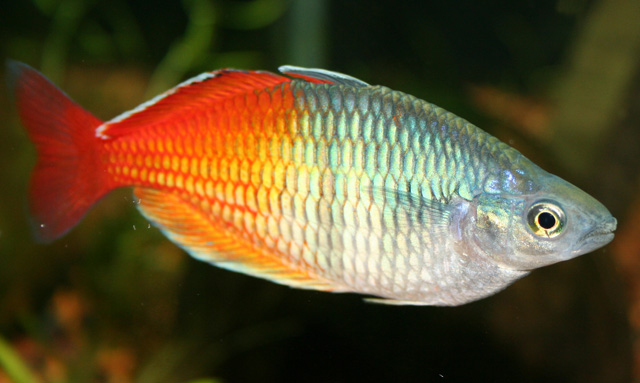
- Stock with appropriate fish (small tetras, rasboras, corydoras, shrimp)
- Use standard filtration and lighting for the water zone
- The hanging plants' roots absorb nutrients from the water — helping control nitrates naturally
Lighting
Ripariums need lighting in two planes:
- Aquatic zone: Standard aquarium LED for submerged plants and fish
- Emersed zone: Additional light source for plants growing above the waterline — a second LED panel or grow light positioned above the tank opening
In Singapore, placing the tank near (not in direct) natural light from a window can supplement emersed plant lighting significantly.
Maintenance
- Water changes: Standard 20–25% weekly water change
- Top-up evaporation: Open-top riparium tanks evaporate quickly — daily top-ups common
- Trim emersed plants: Fast-growing plants like hygrophila and pothos need trimming every 1–2 weeks
- Check roots: Roots that enter the aquarium should remain submerged — trim root masses that become too large or interfere with fish movement
- Mist planters: In heavily air-conditioned rooms, mist the emersed plants daily to compensate for reduced humidity
Browse our plant collection and aquarium accessories — aquatic plants, emersed-capable species, and aquarium hardware for riparium builds available in Singapore.