
Aquarium Water Change Guide for Singapore Tap Water: Chlorine, Chloramine, and Conditioning Basics
Singapore's PUB tap water is among the cleanest and most consistently treated municipal water supplies in Asia — but "safe for humans" does not mean "safe for fish" straight from the tap. The treatment chemicals that keep tap water safe to drink are toxic to fish at aquarium concentrations. Here is what every Singapore aquarium keeper needs to know about treating tap water.
What's in Singapore Tap Water?
PUB (Singapore's water utility) treats water with:
- Chlorine: The primary disinfectant. Deadly to fish and beneficial bacteria in the filter. Dissipates naturally in 24–48 hours of aeration or is removed instantly by dechlorinators.
- Chloramine: A combination of chlorine and ammonia. More stable than chlorine — does NOT dissipate with aeration or aging. Requires a dechlorinator specifically rated for chloramine.
- Fluoride: Added for dental health. Not harmful to most freshwater fish.
- pH adjustment compounds: PUB adjusts pH to approximately 7.0–7.8 after treatment.
Critical point: Singapore water may contain chloramine, not just chlorine. A basic dechlorinator that only neutralises chlorine (sodium thiosulfate) will leave chloramine intact. Use a dechlorinator that specifically states it neutralises both chlorine and chloramine.
Singapore Tap Water Parameters
| Parameter | Typical range | Suitable for |
|---|---|---|
| pH | 7.0–7.8 | Most community fish |
| GH (total hardness) | 6–8° | Most tropical species |
| KH (carbonate hardness) | 2–4° | Adequate buffer; low for CO2 tanks |
| TDS | 100–180 ppm | Good for community fish; too high for caridina shrimp |
| Temperature at tap | 27–30°C | Good match for tropical fish |
| Chlorine/chloramine | Present | Must be treated |
How to Treat Singapore Tap Water for Aquariums
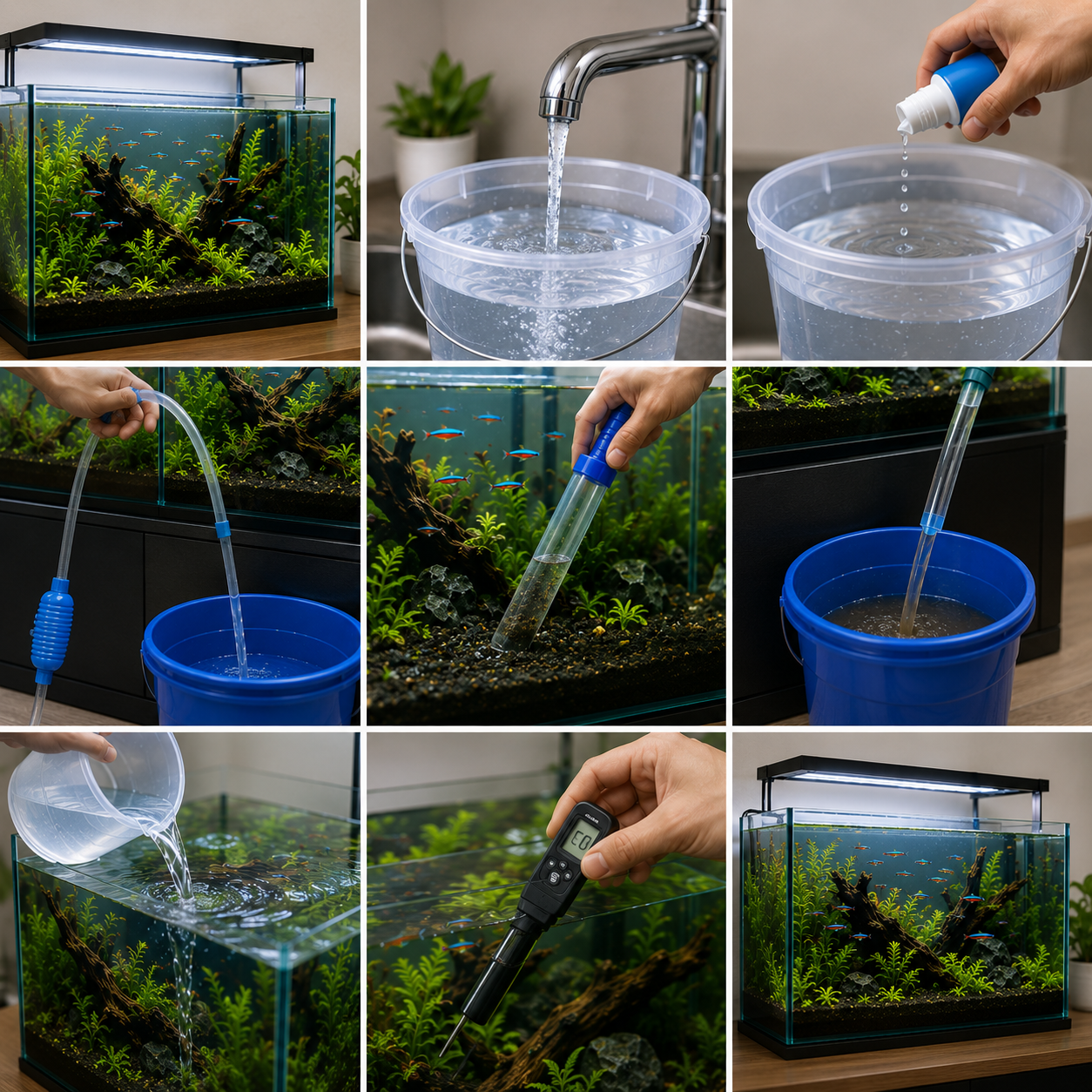
Step 1: Dechlorinate
Use a dechlorinator that neutralises both chlorine and chloramine. Recommended products:
- Seachem Prime: Neutralises chlorine, chloramine, and detoxifies ammonia/nitrite temporarily. 2 ml per 40 litres. The most widely recommended option.
- API Stress Coat: Neutralises chlorine and chloramine; adds aloe vera slime coat protection
- Tetra AquaSafe: Neutralises chlorine and chloramine; adds trace elements
Dose: Follow the product instructions. Most are used at 1–2 ml per 10 litres. Do not skip or underdose — even partial chloramine concentrations stress fish.
Step 2: Temperature Match
Singapore tap water typically runs at 27–30°C — often a close match to tropical tank temperatures. However, during water changes:
- Use a thermometer to confirm tap temperature before adding to the tank
- In heavily air-conditioned rooms, tap water may be cooler than the tank — add water slowly or pre-warm to match
- A sudden temperature drop of 2°C or more can trigger ich in susceptible fish
Step 3: Aerate Before Adding (Optional But Helpful)
Pre-aerating treated tap water in a bucket for 30–60 minutes:
- Drives off any residual gases
- Stabilises dissolved oxygen
- Allows the dechlorinator to fully react
This step is optional with modern dechlorinators like Prime that react instantly, but is a good practice for sensitive fish or large water changes.
Water Change Frequency for Singapore Tanks
Singapore's high ambient temperature accelerates bacterial activity and organic breakdown, making regular water changes especially important:
| Tank type | Recommended frequency |
|---|---|
| Community freshwater (established) | 25–30% weekly |
| Planted aquascape (high-tech) | 30–50% weekly |
| Shrimp tank (neocaridina) | 20% weekly |
| Betta (single fish) | 20–25% weekly |
| New tank (cycling) | 30–50% every 2–3 days |
For Caridina Shrimp: RO Water Required
Singapore tap water TDS (100–180 ppm) and pH (7.0–7.8) are too high for caridina shrimp (crystal red, Taiwan bee) which need:
- TDS: 80–150 ppm
- pH: 5.8–6.8
- KH: near 0
For caridina setups, use reverse osmosis (RO) water remineralised with a caridina-specific remineraliser (Salty Shrimp GH/KH Mineral or equivalent).
RO vs Tap: Which for Each Use Case
| Use case | Water type |
|---|---|
| Community freshwater fish | Singapore tap (dechlorinated) |
| Planted tank (low to high tech) | Singapore tap (dechlorinated) |
| Neocaridina shrimp | Singapore tap (dechlorinated) |
| Caridina shrimp | RO + caridina remineraliser |
| Discus (optimal) | 50% RO + 50% treated tap |
| Blackwater biotope fish | RO or very soft treated tap |
Browse our water care range — dechlorinators, water conditioners, and RO remineralisers available in Singapore.