

How to Store Aquatic Plant Fertilisers, Water Conditioners, and Aquarium Liquids Safely
Aquarium liquids are perishable. Fertilisers lose potency, conditioners degrade, and medications expire — all faster when stored incorrectly. In Singapore's humid, warm climate this matters even more than in temperate countries. Here's how to store aquarium liquids to get the most out of every bottle.
General Storage Rules
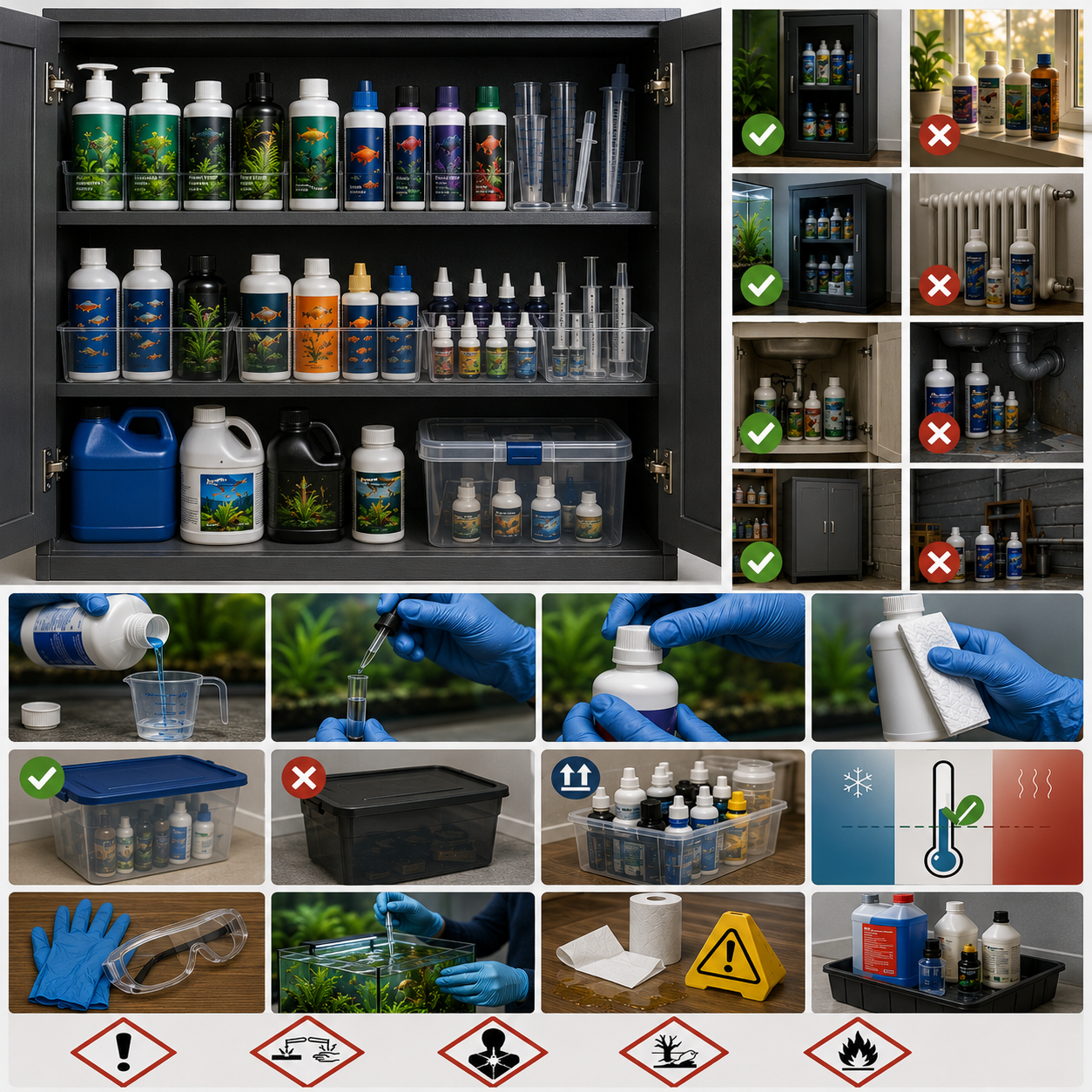
1. Cool, Dark, and Dry
Heat accelerates the breakdown of active chemical compounds in virtually every aquarium liquid. Light drives photodegradation of light-sensitive ingredients.
- Target temperature: Below 25°C
- Avoid: Direct sunlight, top of the aquarium cabinet (heat rises), near the heater or pump
- Ideal: A cupboard or shelf away from the tank, in an air-conditioned room
2. Keep Lids Tightly Closed
Exposure to air oxidises many active compounds, particularly liquid fertilisers and medications. Always:
- Replace lids immediately after use
- Check that caps seal properly — some liquid fertiliser caps develop drip leaks over time
- Do not transfer liquids into unsealed containers
3. Never Store Near Food
Aquarium chemicals — even "natural" products — should never be stored near food, food preparation surfaces, or pet food. Some medications are toxic to humans in concentrated form.
By Product Type
Liquid Plant Fertilisers (All-in-One, Iron, Micronutrients)
- Shelf life: 2–3 years if stored correctly; 12–18 months once opened in warm climates
- Signs of degradation: Colour change, cloudiness, unusual smell, sediment that doesn't dissolve
- Storage: Dark cupboard, below 25°C. Refrigeration is acceptable and extends shelf life for most products but is not necessary if temperature is stable.
Water Conditioners (Dechlorinators, Slime Coat)
- Shelf life: 3–5 years unopened; 2+ years opened if stored correctly
- Do not freeze: Freezing can permanently alter the chemistry
- Signs of degradation: Cloudiness or unusual precipitate (some is normal; heavy flaking is not)
Buffers and pH Adjusters
- Shelf life: Long-term for dry powder forms; 2–3 years for liquids
- Keep dry: Moisture causes dry powder buffers to clump and lose accuracy
- Double-lid: Store open dry buffers in a secondary sealed container with a silica gel packet to absorb humidity
Medications and Treatments
- Shelf life: Check expiry date — most are 2–3 years from manufacture, 12 months once opened
- Discard expired medication: Expired treatments may be less effective or, in some cases, harmful
- Store away from light: Many active compounds (malachite green, methylene blue) degrade rapidly in light
- Keep out of reach of children and pets
Labelling and Organisation
- Write the date of opening on each bottle with a marker
- Organise by use frequency — regularly used conditioners at front, medications at back
- Audit every 6 months — discard anything past its shelf life or showing degradation signs
Disposal
Never pour concentrated aquarium medications or chemicals down the drain or into the garden. Wrap in newspaper, seal in a bag, and dispose with general waste. Check the Singapore NEA guidelines for chemical waste disposal if in doubt.
Browse our water care and fertiliser range — all products available now in Singapore.