

Why Are There Tiny Worms in My Aquarium? Detritus Worms, Planaria, and What They Mean
Spotting tiny worms wriggling through your aquarium water or across the substrate is unsettling — but before you reach for medication or tear down the tank, identify what you're dealing with. Most aquarium worms are harmless, and some are actually beneficial.
Type 1: Detritus Worms (Nematodes)
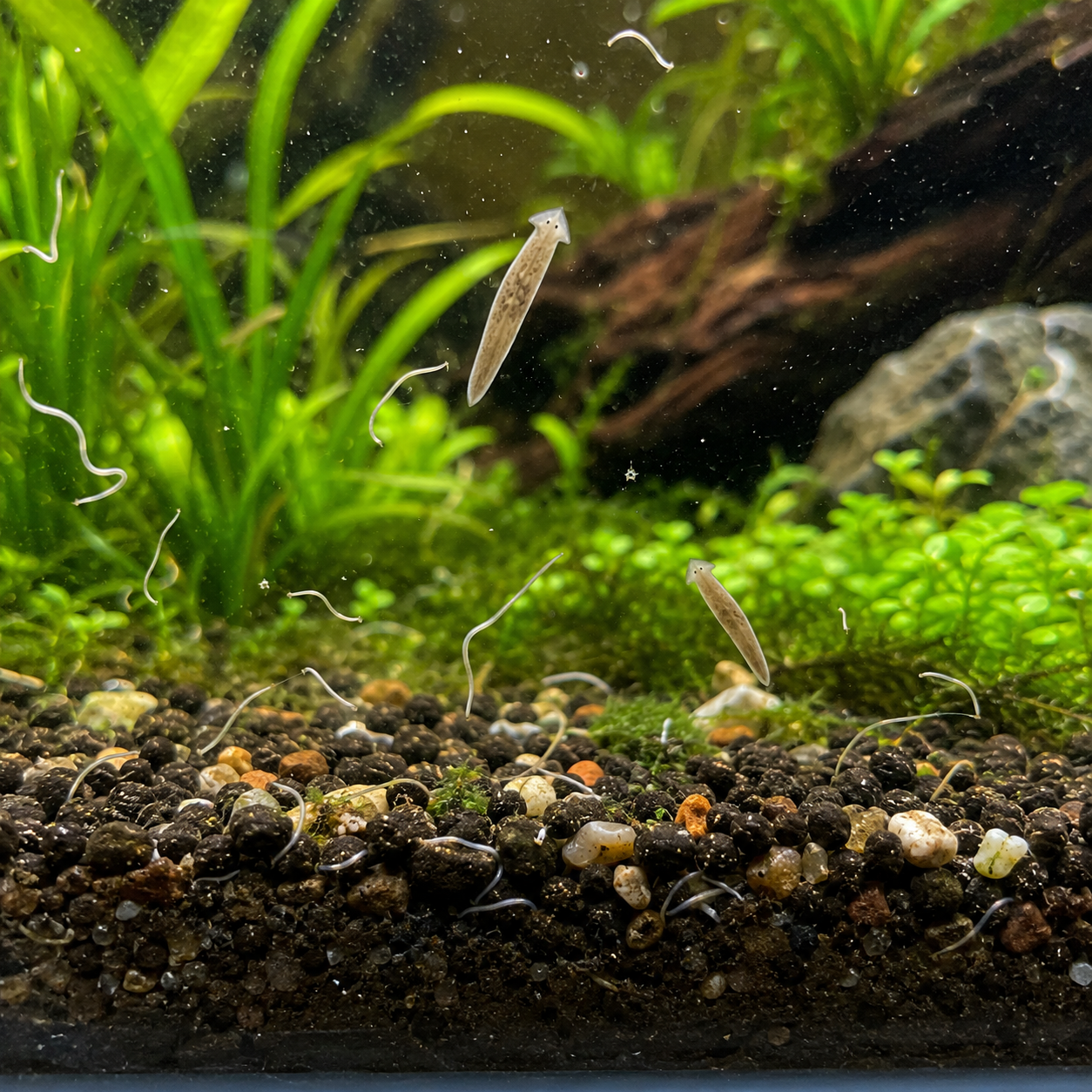
Appearance: Very thin, white or translucent worms, typically 1–5 mm long, seen wriggling freely in the water column or emerging from the substrate.
Are they harmful? No. Detritus worms (free-living nematodes) eat decaying organic matter in the substrate. They are part of any healthy tank's micro-ecosystem.
Why are they visible now? You're seeing them because their population has exploded — which means:
- There is excess decomposing matter (uneaten food, decaying plant material)
- The substrate is not being disturbed enough (no vacuum, no bottom-dwellers)
- Overfeeding is the primary trigger
What to do:
- Reduce feeding — feed only what fish consume in 2–3 minutes
- Siphon the substrate during your next water change
- Add substrate-disturbing fish or shrimp (corydoras, amano shrimp)
- Population will decline naturally as their food source is removed
Type 2: Planaria (Flatworms)
Appearance: Flat, triangular-headed worms, white or pale brown, 3–10 mm long, crawling on glass and surfaces. Their distinctive arrow-shaped or triangular head distinguishes them from detritus worms.
Are they harmful? Planaria are a concern in shrimp tanks specifically — they are known to attack juvenile shrimp and baby snails. In fish-only tanks they are harmless.
Why are they here? Overfeeding is again the primary cause. Planaria populations explode when excess protein food is available.
What to do:
- Significantly reduce feeding
- Use a planaria trap (baited with food, left overnight)
- For shrimp tanks: use a planaria treatment (Benibachi No Planaria or similar) — always remove shrimp first if the label requires it
- Introduce natural predators — some gourami species eat planaria readily
Type 3: Camallanus Worms (Internal Parasites)
Appearance: Thin red worms visible protruding from the fish's anus. This is a serious internal parasite.
Are they harmful? Yes — Camallanus are parasitic roundworms that infect the fish's intestinal tract. Left untreated they cause weight loss, lethargy, and death.
What to do:
- Quarantine affected fish immediately
- Treat with levamisole or flubendazole (appropriate anti-parasitic medication)
- Treat the whole tank if multiple fish are affected
- Perform large water changes during and after treatment to remove expelled worms
Type 4: Tubifex / Blackworms
Appearance: Thin, red-brown worms in clusters in the substrate, waving their tails.
Are they harmful? Tubifex worms in an aquarium indicate poor organic waste accumulation in the substrate. They are harmless to fish but indicate poor tank hygiene.
What to do: Vacuum substrate thoroughly; reduce feeding.
Quick Identification Guide
| Description | Most likely | Action |
|---|---|---|
| Tiny white worms in water column | Detritus worms | Reduce feeding, vacuum substrate |
| Flat, triangular-headed crawlers on glass | Planaria | Trap + reduce feeding |
| Red worms from fish anus | Camallanus | Quarantine + medicate |
| Red worm clusters in substrate | Tubifex | Vacuum + reduce feeding |
Browse our water care and treatment range for planaria treatments and aquarium health products.