
Wabi-Kusa Aquarium Guide: How to Create a Small Planted Display Above and Below Water
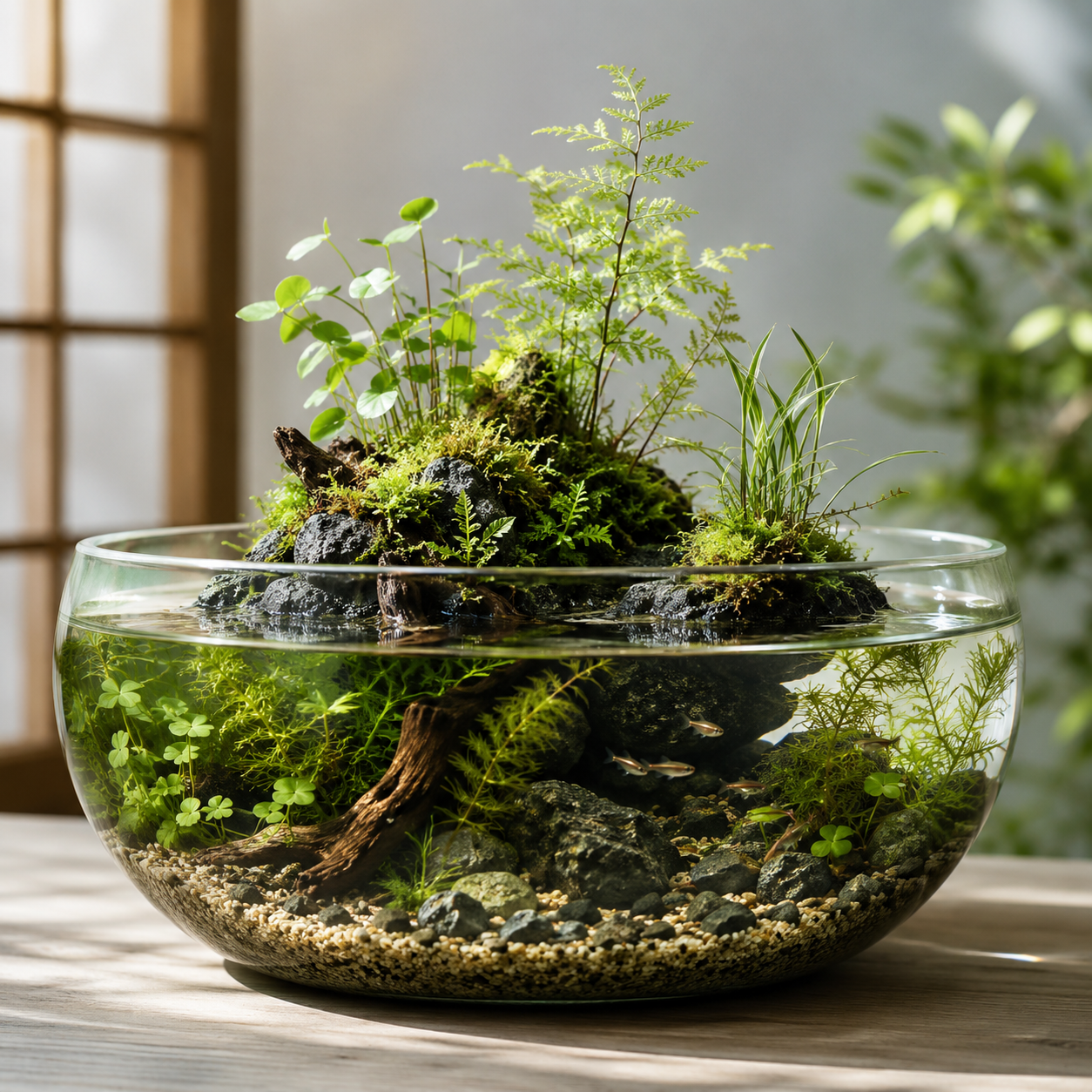
Wabi-kusa (侘草) is a Japanese concept in planted aquariums pioneered by Takashi Amano and ADA (Aqua Design Amano). The word "wabi" refers to the beauty found in simplicity and transience — a concept deeply embedded in Japanese aesthetics. A wabi-kusa is a ball of substrate and aquatic plants that sits partially submerged in water, with plants growing both underwater and emergent above the waterline.
What Is a Wabi-Kusa?
A wabi-kusa is a fist-sized ball composed of:
- A substrate core (aquasoil, clay-based substrate, or substrate mixed with coconut fibre)
- Aquatic plants inserted throughout its surface
The ball sits in a shallow bowl of water. The lower half is submerged; the upper half is exposed to air with high humidity. Plants grow in both environments simultaneously, often developing their emergent (above-water) forms — which in many species are dramatically different in appearance to their underwater forms.
Why Wabi-Kusa Appeals to Singapore Hobbyists
- No filtration required — the water volume is too small for a filter; regular water changes manage water quality
- Minimal equipment — a bowl, water, and the wabi-kusa ball
- Small footprint — ideal for apartment living
- Low electricity cost — only a small LED light is needed
- Unique aesthetic — unlike any other aquarium format
Making a Wabi-Kusa Ball
Materials
- Aquasoil or substrate mixed with a small amount of superworm frass or aquatic fertiliser
- Coconut coir or sphagnum moss to bind the ball
- Fishing line or cotton thread to bind
- Water to moisten
Method
- Moisten your substrate mixture until it can be moulded (like firm clay)
- Form into a sphere approximately 8–12 cm in diameter
- Wrap with a thin layer of damp sphagnum moss or coconut coir
- Bind the moss tightly with cotton thread
- Make insertion holes with a thin stick or chopstick
- Insert plant cuttings into the holes, pressing firmly
- Allow to settle for 24 hours before placing in water
Best Plants for Wabi-Kusa
| Plant | Emergent form | Notes |
|---|---|---|
| Rotala rotundifolia | Round, thick aerial leaves | Classic wabi-kusa plant |
| Hygrophila polysperma | Large, bright green leaves | Fast grower; dramatic emersed form |
| Bacopa caroliniana | Thick, succulent aerial leaves | Lemony smell when touched |
| Eleocharis (hairgrass) | Fine grass blades | Stays compact above water |
| Ludwigia repens | Oval, red-green emersed leaves | Striking colour above waterline |
| Mosses (java moss) | Denser, terrestrial form | Drapes naturally around the ball |
| Anubias | Similar emersed and submersed | Very adaptable |
The Display Bowl
- Material: Ceramic, glass, or acrylic — any shallow, waterproof vessel works
- Water level: Maintain at approximately 50% of the ball height — enough to keep the lower half moist but allowing the upper half to breathe
- Water quality: Change 50–70% of the water weekly — in such small volumes water quality degrades quickly
- No substrate in the bowl: The water is clear with just the ball sitting in it
Lighting
- A small, focused LED lamp positioned 20–30 cm above the ball
- 8–12 hours of light per day
- High humidity around the ball improves emergent growth — misting the plants daily helps significantly in air-conditioned Singapore rooms
Wabi-Kusa with Shrimp
Small bowls with a single wabi-kusa are a popular habitat for cherry shrimp or neocaridina. The shrimp graze biofilm from the ball surface and live among the plant roots. No filter is needed; weekly water changes maintain water quality in the small volume.
Browse our plant collection and aquatic supplies for wabi-kusa plants, aquasoil, and small display vessels available in Singapore.