

Cloudy Aquarium Water: Causes, Types, and How to Fix It
Cloudy aquarium water is one of the most common concerns for both new and experienced fishkeepers. Nothing dampens enthusiasm for the hobby quite like a tank that looks murky or opaque when you were expecting crystal clarity.
The important thing to understand is that not all cloudiness is the same. There are three distinct types — white or grey cloudiness, green cloudiness, and yellow or brown cloudiness — and each has a different cause and a different solution. Applying the wrong fix can make the problem worse.
This guide helps you identify which type you have and addresses it effectively.
Type 1: White or Grey Cloudiness
What It Looks Like
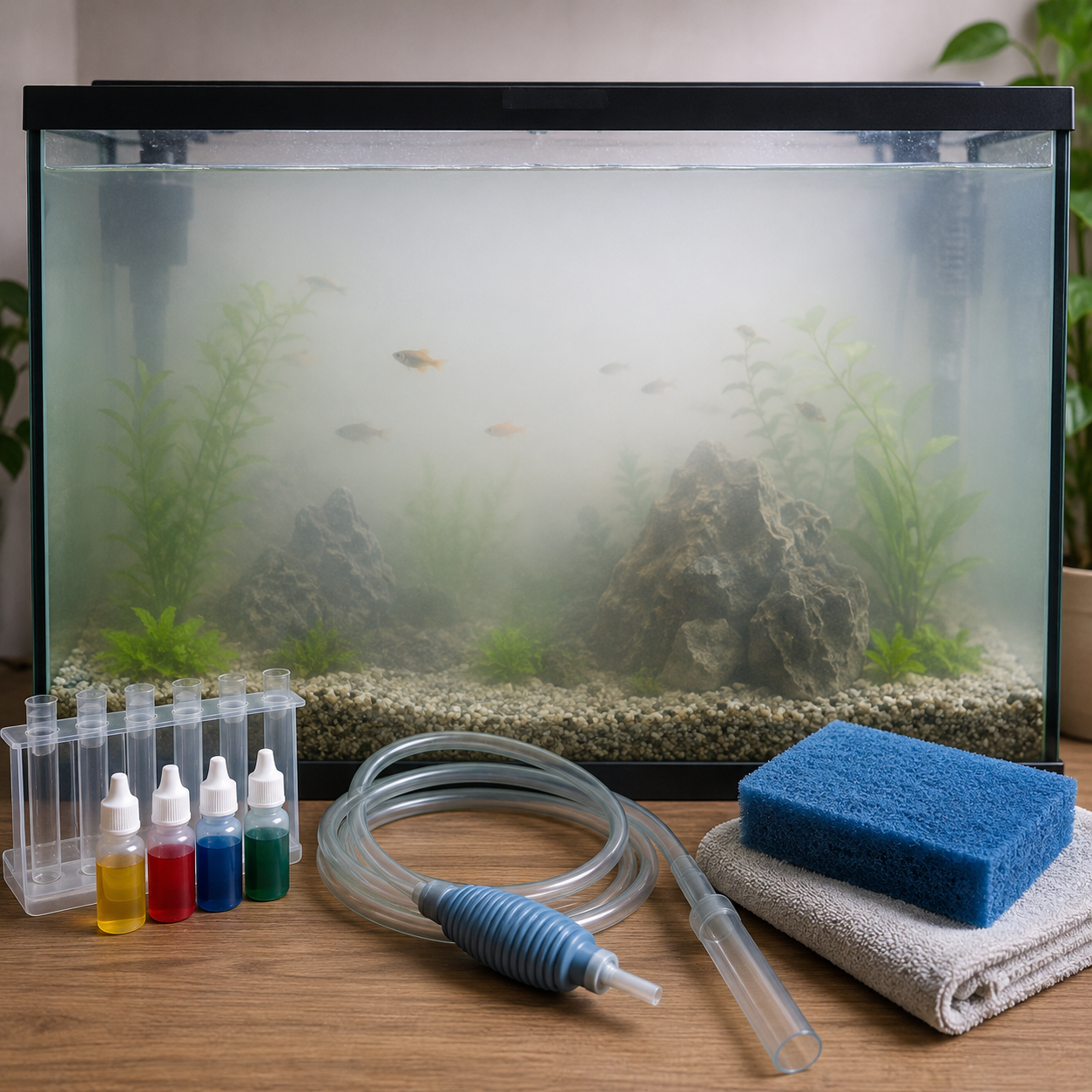
The water appears milky, hazy, or slightly grey. Visibility is reduced but the water does not have a strong colour tint. It may appear shortly after setting up a new tank or after a large water change.
Possible Causes
1. Bacterial Bloom (Most Common in New Tanks)
In the early stages of the nitrogen cycle, heterotrophic bacteria populations explode before the tank reaches biological equilibrium. These bacteria are suspended in the water column, creating a white haze. This is entirely normal and will clear on its own as the cycle progresses — usually within 1–2 weeks.
What to do:
- Do nothing. Do not perform large water changes, which can remove the bacteria and restart the bloom.
- Continue running the filter.
- Monitor ammonia and nitrite levels. If they are within safe range, the bloom is harmless.
2. New Substrate (Fine Particles)
Fine substrates like sand or some gravels release tiny particles when first added. These settle over 12–48 hours but create cloudiness in the meantime.
What to do:
- Rinse new substrate thoroughly before adding it to the tank (even if the packaging says pre-rinsed).
- Run a fine mechanical filter medium (filter floss or a micron pad) to trap particles faster.
- Allow 48 hours for settlement.
3. Disrupted Substrate
Vacuuming, re-scaping, or disturbance from active fish (like loaches or corydoras in fine sand) kicks up settled detritus and particles.
What to do:
- Allow 12–24 hours for particles to resettle.
- Ensure the filter is running efficiently to capture particles.
4. Overstocking or Overfeeding
Excess waste from too many fish or too much food leads to elevated bacterial and suspended organic matter.
What to do:
- Reduce feeding to once daily; remove uneaten food within 5 minutes.
- Perform a 25–30% water change.
- Review stocking levels. See: Freshwater Community Tank Compatibility Guide.
Type 2: Green Cloudiness
What It Looks Like
The water has a distinctly green tint — ranging from light green haze to thick "pea soup." Individual algae organisms are too small to see, but their collective mass colours the water.
Cause: Free-Floating (Planktonic) Algae
Green water is caused by microscopic single-celled algae suspended throughout the water column. The two most common triggers are:
- Too much light, particularly direct sunlight hitting the tank for any part of the day
- High nutrients (nitrate, phosphate) combined with adequate light
How to Fix Green Water
Option 1: Blackout Treatment Cover the tank completely with black plastic or cardboard for 3–4 consecutive days. Algae require light for photosynthesis — without it, the bloom dies. Fish and plants tolerate a 3–4 day blackout without issue.
After the blackout:
- Remove the covering
- Perform a 30–50% water change
- Reduce lighting to 6–8 hours per day
- Address the nutrient source (reduce feeding, increase water change frequency)
Option 2: UV Steriliser A UV steriliser installed in-line with the filter kills suspended algae cells as they pass through. Green water clears within 24–72 hours. This does not address the root cause but is highly effective.
Option 3: Flocculant / Clarifier Product Flocculants cause microscopic particles to clump together and be removed by the filter. Some products work on green water algae. Follow dosing instructions carefully — overuse can reduce oxygen levels.
Permanent prevention:
- Move the tank away from any direct sunlight
- Use a timer for consistent, limited photoperiods (8 hours maximum)
- Perform weekly 25–30% water changes
- Add live plants to compete for nutrients
Type 3: Yellow or Brown Cloudiness
What It Looks Like
The water has a tea-coloured tint — yellow, amber, or pale brown. This is distinct from general turbidity; the water is tinted, not opaque.
Cause: Tannins from Driftwood or Botanicals
New driftwood, dried leaves, seed pods, and similar botanicals leach tannins into the water. Tannins are completely harmless and actually beneficial for many soft-water tropical fish — they slightly acidify and soften the water, mimicking the blackwater rivers of South America and Southeast Asia.
What to do if you want clear water:
- Soak driftwood in a separate container with hot water for 1–2 weeks before adding it to the tank, changing the water daily
- Activated carbon in the filter removes tannins relatively quickly (replace every 4 weeks)
- Perform regular water changes
What to do if you prefer tinted water: Many fish (bettas, cardinal tetras, discus, wild-caught Southeast Asian species) genuinely thrive in lightly tinted water. If your fish are healthy and active, the tint is a feature, not a problem.
When to Worry About Cloudy Water
Most cloudiness is harmless and self-correcting. However, seek immediate action if:
- Fish are gasping at the surface (possible oxygen depletion or ammonia toxicity)
- Fish show signs of distress — clamped fins, erratic swimming, hiding
- Test results show ammonia or nitrite above 0 ppm in an established tank
- The cloudiness appeared suddenly in a previously clear, established tank (may indicate a bacterial die-off or filter failure)
For reference on the nitrogen cycle and ammonia management, see: How to Cycle a Fish Tank.
Quick Fix Summary
| Cloudiness Type | Cause | Fix |
|---|---|---|
| White/Grey — new tank | Bacterial bloom | Wait; do not disturb |
| White/Grey — new substrate | Fine particles | Rinse substrate; wait |
| White/Grey — established tank | Overfeeding or overstocking | Water change; reduce feeding |
| Green | Planktonic algae | Blackout or UV steriliser |
| Yellow/Brown | Tannins from wood/botanicals | Activated carbon; soaking wood |
Frequently Asked Questions
How long does new tank cloudiness last? A bacterial bloom in a cycling tank typically resolves within 1–2 weeks. Substrate particle cloudiness clears within 24–48 hours. Green water requires active treatment (blackout or UV steriliser) and may recur if the underlying cause is not addressed.
Will a water change clear cloudy water? For bacterial blooms in new tanks, water changes can reset the bloom and prolong the issue. For overfeeding-related cloudiness in established tanks, a partial water change helps. For green water, water changes help but do not fully resolve the problem without also reducing light and nutrients.
Why is my water cloudy after cleaning the filter? Filter cleaning disrupts the bacterial colony. If filter media was cleaned with tap water (which contains chlorine), a significant portion of beneficial bacteria may have been killed, triggering a mini-cycle and bacterial bloom. Always rinse filter media in old tank water.
Is cloudy water dangerous to fish? Usually not — most causes of cloudiness are harmless. The exception is cloudiness combined with high ammonia or nitrite readings, which indicates a water quality emergency requiring immediate large water changes.
Does activated carbon clear cloudy water? Activated carbon removes dissolved organic compounds and tannins (yellow/brown discolouration), but is not effective against bacterial blooms or suspended algae. For bacterial blooms and green water, other approaches are needed.