

Ranchu Goldfish Care Guide: Tank Setup, Feeding, and Water Quality Tips
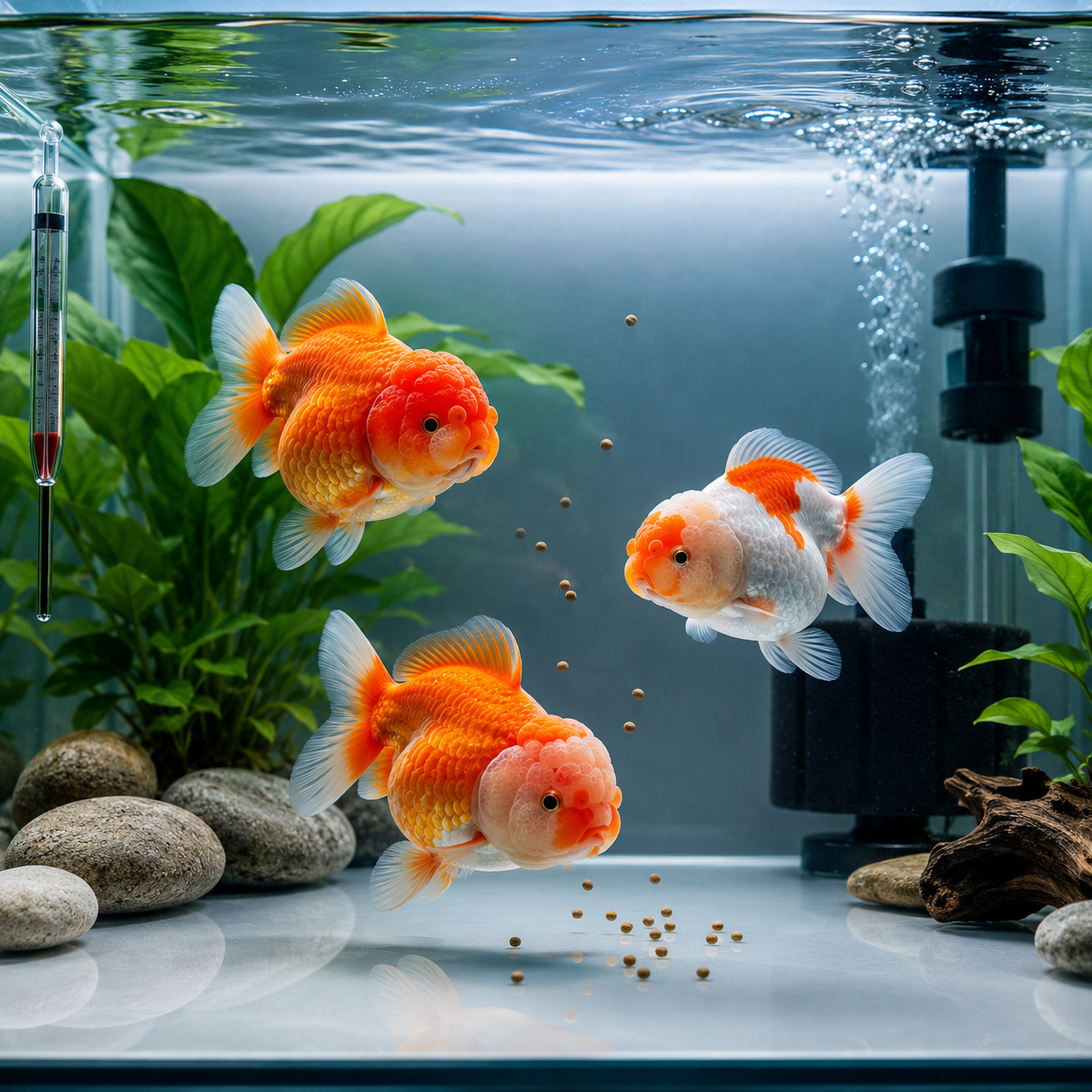
The ranchu (Carassius auratus) is one of the most admired fancy goldfish varieties in Asia and worldwide. Known in Japan as the "king of goldfish," the ranchu is characterised by its deeply arched back (with no dorsal fin), rounded "lion head" wen (fleshy hood growth on the head), and compact, rounded body with a forked tail. Watching a group of well-bred ranchus move gracefully through a clean aquarium is genuinely captivating — they combine elegance with comical charm.
Ranchus require the same diligent care as other fancy goldfish, with some additional considerations due to their unusual body shape.
Quick Reference: Ranchu Care at a Glance
| Parameter | Ideal Range |
|---|---|
| Tank size (minimum for 2) | 100–120 litres |
| Temperature | 15–22°C (cool water) |
| pH | 7.0–8.0 |
| Hardness (GH) | 8–20 dGH |
| Adult size | 15–20 cm |
| Diet | Omnivore |
| Lifespan | 10–20 years |
What Makes Ranchus Different from Other Fancy Goldfish
- No dorsal fin — unlike most goldfish, ranchus have no dorsal fin; their arched back is the defining characteristic
- Prominent wen — the fleshy head growth develops with age; quality of wen development is a key aesthetic criterion for breeders
- Rounded, compact body — more constrained internal organ space than slim-bodied goldfish; more susceptible to swim bladder issues
- Slower, more deliberate movement — their round body and absent dorsal fin make them less agile than other goldfish; they cannot compete well with faster feeders
- Available in many colour forms — red-and-white (the classic), solid red, solid white, calico (multicoloured), black, and blue
Tank Size and Setup
Minimum: 100–120 litres for two ranchus.
Like all fancy goldfish, ranchus need significantly more space than their size suggests due to their high waste output. Add 30–40 litres per additional ranchu.
Tank shape: Ranchus are traditionally kept in shallow ponds (known as tategoi cultivation in Japan), and they do well in wider, shallower tanks with a large footprint rather than tall, narrow aquariums. This gives them room to swim horizontally without struggling vertically.
Key setup features:
- Heavy filtration — ranchus produce enormous amounts of waste; canister filters or powerful HOB filters rated at 3–5x tank volume per hour are necessary; see Aquarium Filter Guide
- Smooth substrate — fine sand or no substrate (bare bottom); avoid sharp gravel that can injure their wen or be ingested
- Minimal sharp decor — ranchus' wens are vascular and can be easily injured
- Adequate surface agitation — goldfish need high oxygen levels; ensure the filter output or an air stone creates surface movement
- No plants — ranchus eat most plants; if you want greenery, use robust anubias attached to hardscape
For general tank setup guidance, see The Complete Freshwater Aquarium Setup Guide and Goldfish Tank Setup Guide.
Water Temperature: The Singapore Challenge
Ranchus, like all goldfish, are cool-water fish that prefer 15–22°C. Singapore's ambient temperature (27–31°C) exceeds this by a significant margin.
Keeping ranchus in Singapore requires one of the following:
Option 1: Aquarium chiller The most reliable solution. A chiller maintains water temperature at 20–22°C regardless of ambient temperature. This also increases electricity costs but is the best long-term health option for ranchus.
Option 2: Air-conditioned room If your air-conditioning maintains room temperature at approximately 20–24°C, this provides acceptable conditions without a chiller.
Option 3: Outdoor pond with shade and aeration Some Singapore enthusiasts keep ranchus in outdoor ponds with heavy shade, large water volume (thermal buffering), and strong surface aeration to compensate for reduced oxygen at higher temperatures. Ranchus bred locally and acclimatised to tropical conditions tolerate this better than cold-climate imports.
Consequences of chronically warm water for ranchus:
- Reduced dissolved oxygen — surface gasping
- Increased disease susceptibility
- Shortened lifespan
- Reduced wen development quality in breeding lines
Water Quality: Non-Negotiable
Goldfish are sometimes perceived as robust — they are not. They are sensitive to ammonia and nitrite, and their high waste production means water quality degrades faster than in most other setups.
Water change schedule:
- 30–40% weekly minimum
- Daily or every-other-day changes recommended by serious ranchu enthusiasts (particularly in warm Singapore conditions where biological activity is accelerated)
Key parameters:
- Ammonia: 0 ppm
- Nitrite: 0 ppm
- Nitrate: Below 20–40 ppm
- pH: 7.0–8.0
For cycling guidance, see How to Cycle a Fish Tank.
Feeding Ranchus
Ranchus have the same nutritional needs as other fancy goldfish, with an important caveat: their compact, rounded body makes them particularly prone to swim bladder disorder — especially when fed floating foods that cause them to surface-feed and ingest air.
Always use sinking foods for ranchus.
Recommended diet:
- Sinking goldfish pellets — the staple; ensure pellets are small enough for the ranchu's mouth
- Sinking granules — easier to control portions; soak briefly in tank water before feeding if dry
- Blanched vegetables: peas (de-shelled — excellent for swim bladder health), zucchini, spinach, romaine lettuce
- Frozen bloodworms — protein supplement; readily accepted
- Frozen brine shrimp — variety and colour enhancement
- Daphnia — promotes digestive health; particularly important after any sign of constipation
Foods to avoid:
- Floating pellets or flakes — cause air ingestion and swim bladder issues
- Dried tubifex worms (infection risk)
- Large, hard foods the ranchu cannot easily break down
Feeding frequency: Two to three small feedings daily. Only what is consumed within 2–3 minutes. Ranchus are persistent beggars but resist overfeeding.
For general feeding guidance, see How Much and How Often Should You Feed Aquarium Fish?.
Wen Care and Development
The wen (head growth) is the most distinctive feature of the ranchu. Quality wen development:
- Grows steadily as the fish matures (most development occurs between 1 and 3 years of age)
- Should be symmetrical and full, covering the top and sides of the head
- Can grow over the eyes in some specimens — if this happens, minor trimming by an experienced handler may be necessary
Wen health:
- Wen tissue is vascular and prone to bacterial infection if damaged
- Keep the tank free of sharp objects that could scratch wen tissue
- Any red patches, swelling, or white spots on the wen should be treated promptly with appropriate medication
Compatible Tankmates
Ranchus should ideally be kept only with other fancy goldfish of similar speed and body type. Faster goldfish or fish from other species will out-compete them for food.
Suitable tankmates:
- Other fancy goldfish: oranda, ryukin, pearlscale, telescope, butterfly tail (all similar in speed)
- Avoid fast common goldfish and comets — they will out-compete ranchus for every meal
- Avoid tropical fish — incompatible temperature requirements
Frequently Asked Questions
Why does my ranchu float or swim tilted? Swim bladder disorder is common in ranchus, often caused by constipation, air ingestion from floating food, or bacterial infection. Fast the fish for 2–3 days, then offer de-shelled peas and daphnia. Switch to sinking pellets if you have been using floating food.
How do I grow my ranchu's wen? Wen development requires good genetics, optimal water quality, proper temperature (cooler water is associated with better wen development), and a protein-rich, varied diet. There is no shortcut — patience and consistent care are the only reliable factors.
Can ranchus live in a Singapore outdoor pond? Yes, but with careful management. Large ponds with heavy shade, strong surface agitation, and locally acclimatised fish can work. Ranchus from breeders who have kept them at tropical temperatures adapt better than cold-climate specimens.
How can I tell a ranchu from a lionhead goldfish? The key difference is the back curvature — ranchus have a dramatically arched, curved back, while lionhead goldfish have a flatter back. Both lack a dorsal fin and have similar wen development.
Where can I buy quality ranchus in Singapore? Specialist goldfish shops and ornamental fish farms carry ranchus. Online goldfish communities and forums are excellent sources for connecting with local breeders who sell higher-quality specimens than most general fish shops.